.png) 1 week ago
14
1 week ago
14

Upgrade to High-Speed Internet for only ₱1499/month!
Enjoy up to 100 Mbps fiber broadband, perfect for browsing, streaming, and gaming.
Visit Suniway.ph to learn
Brent crude hit an intraday high of nearly $120 per barrel on March 9, its highest level since 2022. The next day it crashed to $82 before ending the week at $103. Such violent swings – $38 in just two days – are rare and show that oil is now trading on fear and uncertainty over how far the war will go.
At the center of the crisis is the Strait of Hormuz, the world’s most important oil chokepoint. Roughly 20 percent of global oil flows through it, and it is now effectively shut. Tanker traffic has collapsed, insurance coverage has been withdrawn and even the International Energy Agency’s record 400 million-barrel emergency release failed to calm markets.
Concerns over stagflation
The shock is no longer confined to oil. Bloomberg estimates roughly $6 trillion in global equity value has been erased since the war began. Bond yields have surged as traders discuss the possibility of stagflation – the combination of rising inflation and slowing growth that haunted the 1970s.
Investors are fleeing emerging markets at a record pace. The iShares MSCI Emerging Markets ETF (EEM) fell by 8.41 percent in the first week of the war alone. The PSEi has posted back-to-back weekly losses of more than four percent. The US dollar, the world’s traditional safe haven, has surged past 100 on the DXY Index as capital flees riskier assets. The peso closed last Friday at a new all-time low of 59.735 against the dollar.
For the Philippines, this is an immediate economic threat. The country imports nearly all of its crude oil and remains highly exposed to disruptions in the Middle East. We have seen this before. In 1973, the Arab oil embargo triggered the world’s first true energy crisis. More than 50 years later, the parallels are hard to ignore.
When oil became a weapon
On Oct. 17, 1973, Arab oil producers launched an embargo against countries that supported Israel during the Yom Kippur War. Production was cut, exports were restricted and oil was turned into an economic weapon. Prices quadrupled from about $3 per barrel to nearly $12 within months.
The shock rippled across the world. Gasoline was rationed and long lines formed at service stations. In some countries, odd-even license plate schemes were introduced, Sunday driving was banned and fuel use was tightly controlled. The 1973 embargo changed the way governments thought about energy security.
When Manila felt the shock
The Philippines was badly hurt. The government rationed gasoline through coupons distributed by local officials. A “share-a-ride” system encouraged commuters to travel together. As LPG prices doubled, families returned to cooking with firewood and sawdust. Even the colorful parol displays that define Filipino Christmases were scaled back. The crisis prompted the creation of the Philippine National Oil Co. under Presidential Decree 334 in November 1973. For a country dependent on imported oil, an external supply shock quickly becomes an economic emergency.
From embargo to blockade
In 1973, the shock came from a coordinated embargo by Arab producers. This time, the crisis is being driven by Iran and the closure of the Strait of Hormuz. After the US-Israeli strikes that killed Iran’s Supreme Leader Ali Khamenei, Tehran responded with drone attacks, sea mines and strikes on commercial vessels. The Gulf producers are themselves vulnerable to Iranian retaliation.
Asia’s response to the oil shock
Thailand imposed a diesel price cap and restricted oil exports except to Cambodia and Laos. Vietnam tapped its fuel stabilization fund and removed import tariffs. Indonesia is building strategic crude storage. China suspended state-owned fuel exports. Across the region, petrochemical firms have begun declaring force majeure.
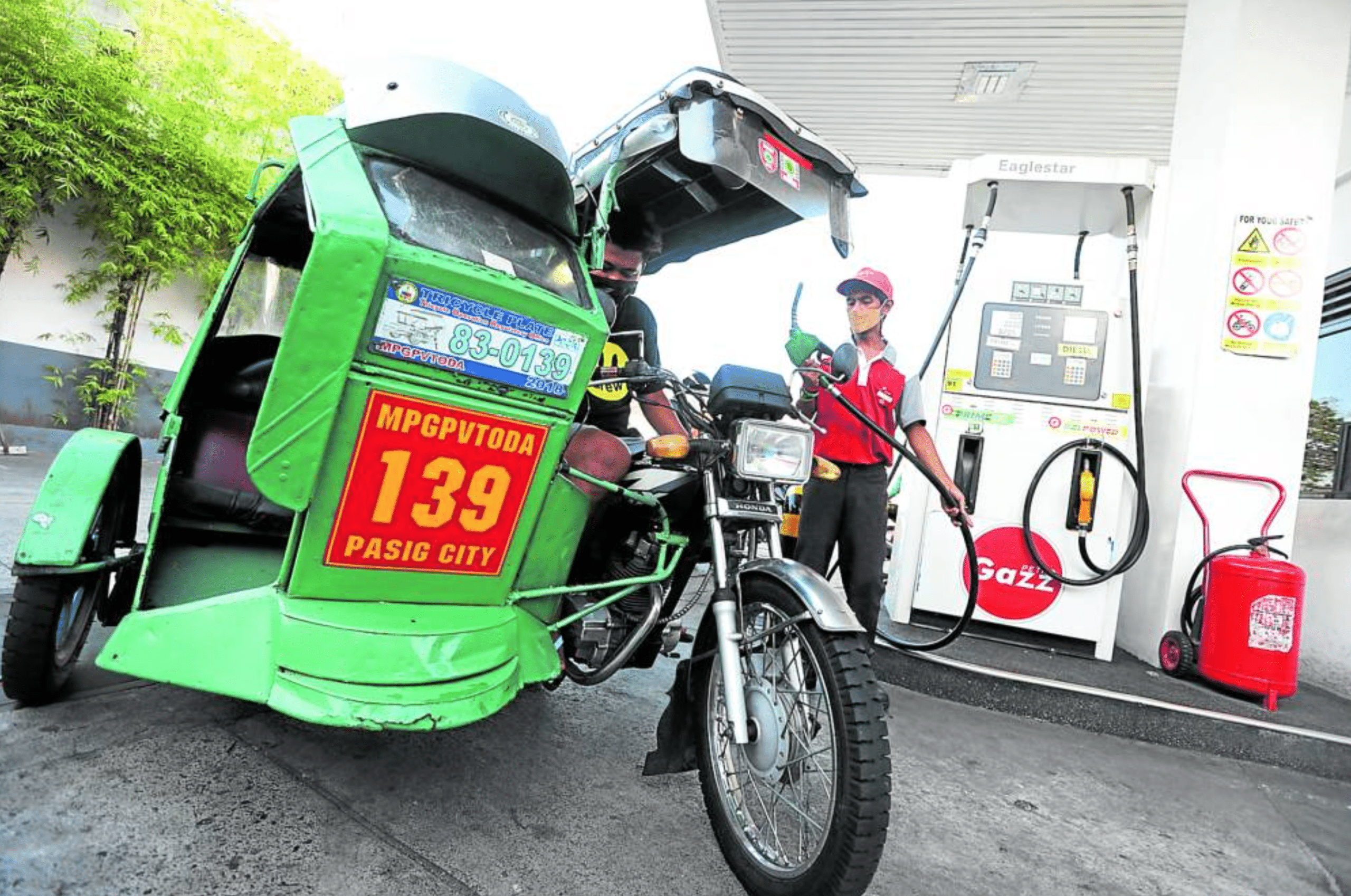
Filipinos are already feeling the impact. Diesel prices rose by up to P24 per liter and gasoline by up to P13 per liter in the week of March 10, with oil companies staggering increases over several days. Another round of hikes is expected this week.
In response, Philippine government agencies have shifted to a four-day onsite workweek, with Friday designated as a work-from-home day. Some local governments have gone further, making Friday a full non-working day. President Marcos certified as urgent a bill granting him emergency powers to suspend excise taxes on petroleum products. Fuel subsidies and no-fare bus rides have also been rolled out.
‘Tool to pressure enemy’
The key issue now is no longer just how high oil can go. It is whether the major powers can stop the crisis from widening. But the signals from Tehran are not encouraging. In his first public statement since being appointed supreme leader, Mojtaba Khamenei said that the crucial Strait of Hormuz should remain closed and that Iran would continue attacks on its Persian Gulf neighbors. He said that the Strait must continue to be used as a “tool to pressure the enemy.”
The Islamic Revolutionary Guard Corps has gone further, vowing not to allow “a liter of oil” through the strait and warning that any vessel linked to the US, Israel or their allies “will be considered a legitimate target.”
If the conflict spreads beyond tankers and shipping lanes to ports, power facilities and desalination plants across the Gulf, the damage will be far greater. What begins as an oil shock could become a broader breakdown in energy, trade and infrastructure across the region, with global consequences. As long as Iran treats the strait as a weapon, the entire world remains hostage to the war.