2 months ago
80
2 months ago
80

Upgrade to High-Speed Internet for only ₱1499/month!
Enjoy up to 100 Mbps fiber broadband, perfect for browsing, streaming, and gaming.
Visit Suniway.ph to learn
MANILA, Philippines – Many houses in Doña Imelda sprawl upward. An informal settlement had grown along the left bank of the San Juan River. To protect themselves from recurring floods, people built upper levels in their homes.
Parts of the sheet pile separating their homes from the river have broken down. Ricky Calinaya, 52, said that for 16 years, residents living near the river had fought for permanent housing.
Years of organizing led to a recent victory. In 2025, holding firm Gregorio Araneta Incorporated donated the parcel of land where they live to the Quezon City government. They are now urging the city government to pass the ordinance that would reclassify the property from open space to residential use.
They have faced demolition threats in the past: during Typhoon Ondoy in 2009 and in the following years, when the late environmental advocate Gina Lopez led the now-defunct Pasig River Rehabilitation Commission, which cleared informal settlements along esteros.
Calinaya is president of ULAP (Ugnayang Lakas ng mga Apektadong Pamilya), an urban poor group that advocates for decent housing in Doña Imelda, Quezon City.
“Kami naman ay nangangarap naman kami ng mas maayos na tirahan,” Calinaya told Rappler. “Nangangarap kami ng mapayapa, maayos.” (We dream for decent housing. We dream for peace and order.)
Calinaya and the residents are working with non-governmental organizations Community Organizers’ Multiversity, TAO Pilipinas, and UP Task Force Arki – a student organization based in the University of the Philippines-Diliman – to design the housing they want.
Calinaya said he moved here in 1994. Galvanized sheets and worn out plywood plaster the walls of the vertical houses. Freshly laundered clothes lined up to dry from the second floor overhang. Waste had built up between the sheet pile and houses on stilts, floating on idle water or strewn across a narrow pathway.
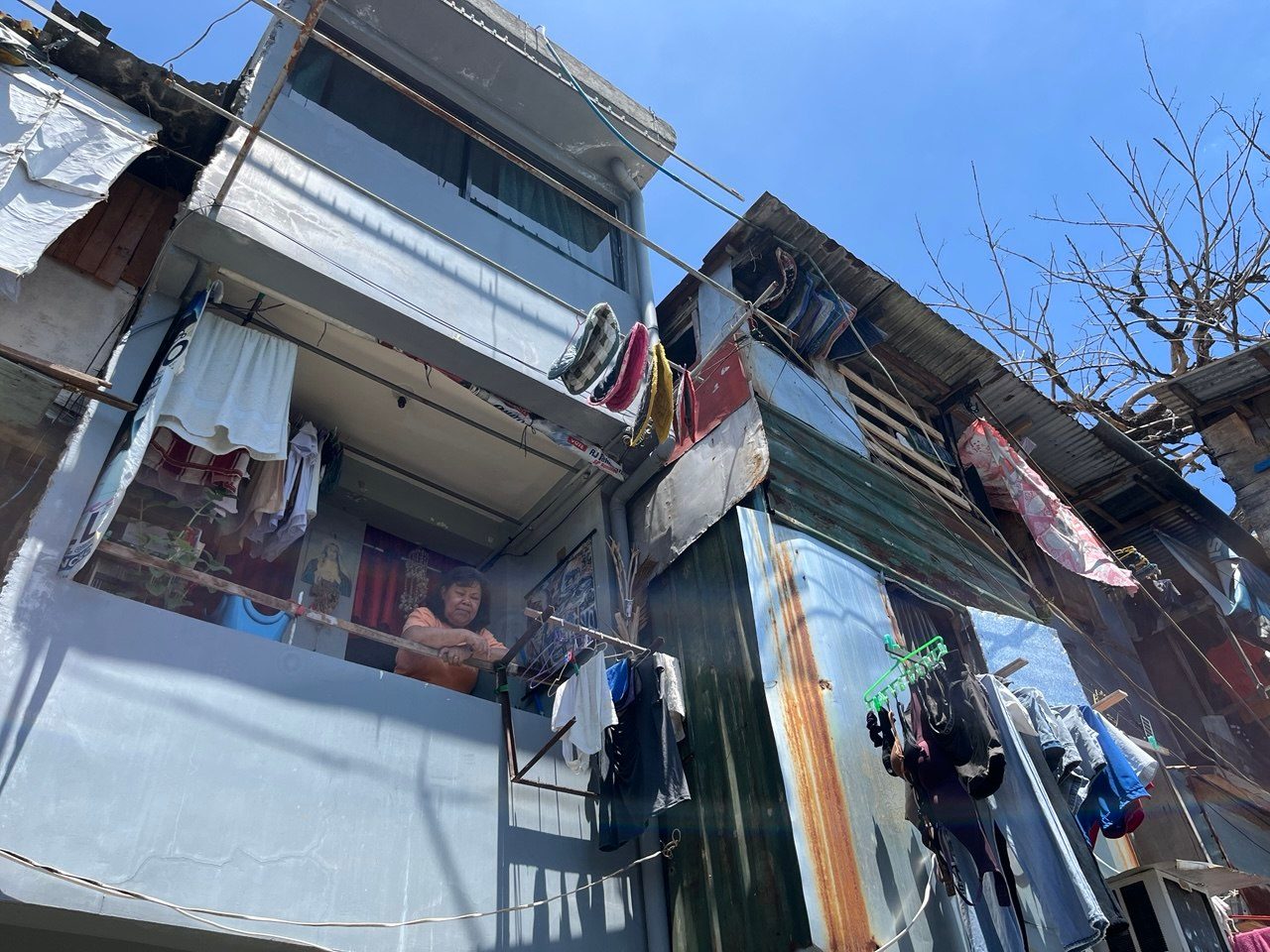 WATCH. A resident of Doña Imelda near the San Juan river looks out her balcony. Photo by Iya Gozum/Rappler
Their settlement is near Aurora Boulevard, and a bit farther away, G. Araneta Avenue and Quezon Avenue. They have been offered to be relocated in Bulacan, said Calinaya. But their location in the most populous and largest city in the Philippines remains more accessible and convenient for them. Calinaya said delivery of welfare programs in Quezon City have improved since these were digitized.
“Kaya kami ilalaban na lang namin ito hangga’t kayang ilaban,” said Calinaya. (That’s why we are fighting to stay here as long as we can.)
Arlene Lusterio, architect and executive director of TAO Pilipinas, said they have been working with the Doña Imelda community since 2011.
Their work is mainly focused on making an alternative plan or “people’s plan” through a process that involves the residents.
“Normally, consultations generate several plan and design alternatives,” Lusterio told Rappler through email. “Then the community selects the best option and we move forward to finalize the design.”
Lusterio described the process as a “continuing negotiation” and that the design may evolve when they incorporate the comments of the city government once it is presented.
While NGOs are helping the residents to design the housing they want, Calinaya said they are eyeing partnering with the Quezon City government or the Department of Human Settlements and Urban Development for funding.
According to Calinaya, residents want a loft-type housing project that can accommodate growing families. For their community needs, the estimated 616 families are seeking a small chapel, a daycare center for children, a multipurpose hall and a basketball court.
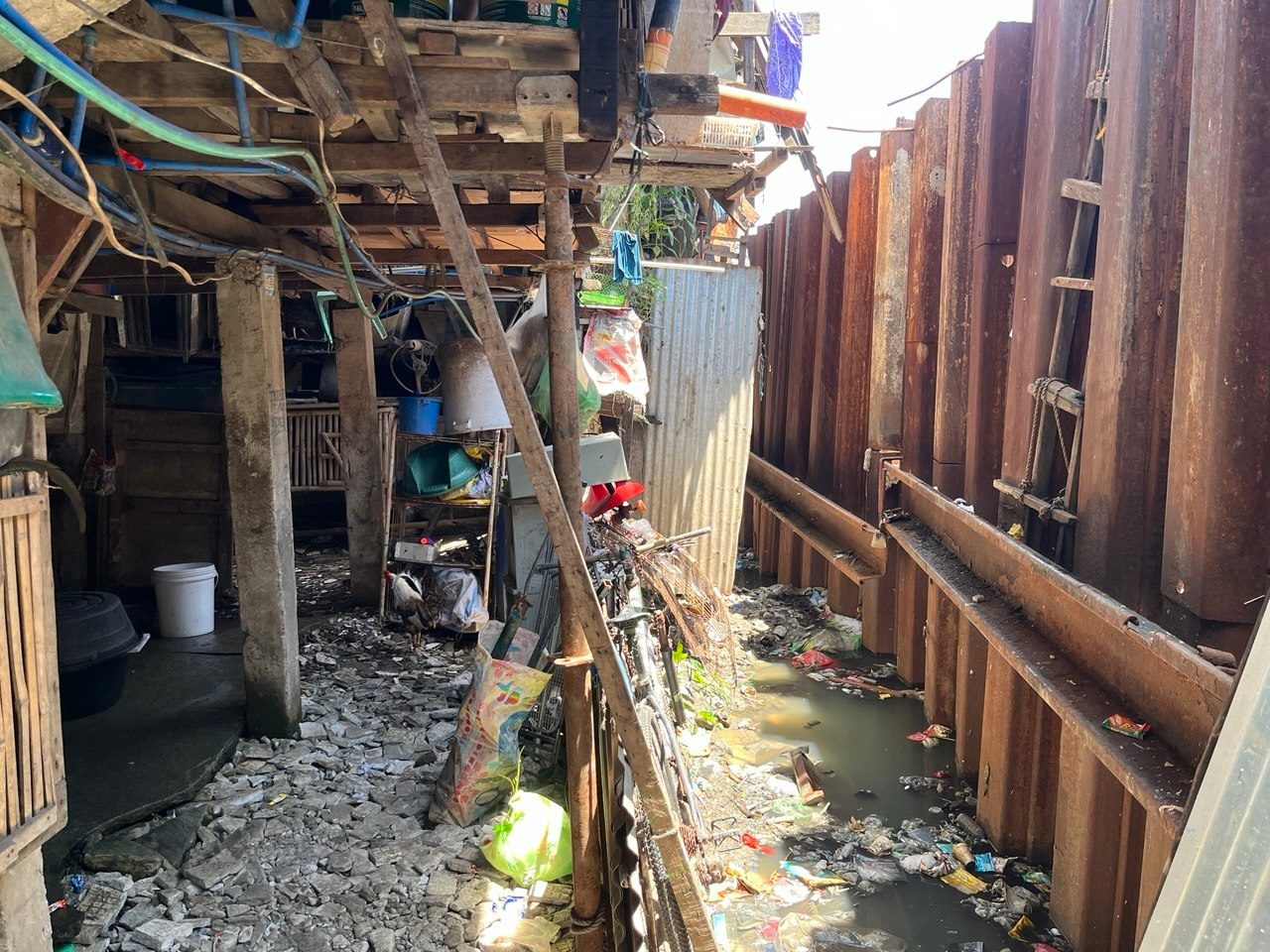 EDGE. Waste build up between the sheet pile and the houses nearest the river. Photo by Iya Gozum/Rappler
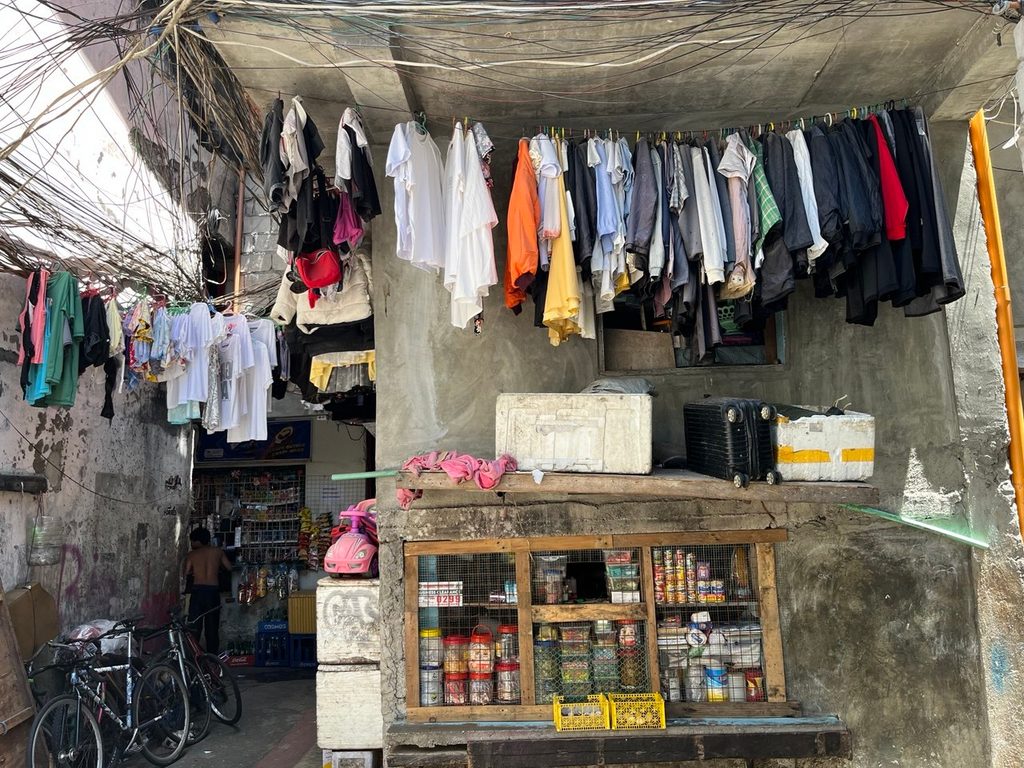 OVERHANG. Clothes lined up on the overhang of a house. Residents make income with a sari-sari store on the ground floor. Photo by Iya Gozum/Rappler
The government has outlined standards for economic and socialized housing through Batas Pambansa No. 220. The law defines economic and socialized housing as “a type of housing project provided to moderately low income families with lower interest rates and longer amortization periods.”
The basic needs in settlements enumerated are utilities and infrastructure that make a good environment: water, movement and circulation, storm drainage, solid and liquid waste disposal, park or playground, and power.
The idea is that personal and community growth should be made possible even for the urban poor – a sector in the margins of big cities, pummeled by high commodity prices and low wages.
Staying put
In-city housing projects for informal settlers along waterways is one way of responding to the issues of Pasig River pollution and urban sprawl.
Earlier this year, Quezon City and the DHSUD agreed to undertake two housing projects for at least 2,900 individuals living along waterways or in danger zones.
But many residents in the river settlement in Doña Imelda want to stay put. Offers to relocate do not quite satisfy some residents who have put down roots in the largest city in the country.
Kami naman ay nangangarap naman kami ng mas maayos na tirahan. Nangangarap kami ng mapayapa, maayos.
ricky calinyaTo escape recurring floods, residents have adapted by building their houses upward. One of their requests for the design is an open ground floor so that no unit is reached by floodwaters whenever there is heavy rain.
It will be a long time before their dream of socialized housing becomes a reality, with the design and consultations still ongoing and residents waiting for the local government’s ordinance. But residents have remained patient. It is a process they are willing to see through to achieve the best results possible.
“Kung gagawa ka lang din naman ng permanenteng housing, gawin na natin maayos,” said Calinaya. “Gagastusan din naman ang gobyerno ‘yun. Kung gagastos ka, ‘yung pang matagalan na.”
(If you’re building permanent housing, do it properly. That will be financed by the government. If you’re spending funds, it’s better to make something that is durable.) – Rappler.com