.png) 1 month ago
30
1 month ago
30

Upgrade to High-Speed Internet for only ₱1499/month!
Enjoy up to 100 Mbps fiber broadband, perfect for browsing, streaming, and gaming.
Visit Suniway.ph to learn
President Marcos has identified 21 priority laws that need to be fast-tracked either for passage or amendment by July this year.
Among these is the Bank Deposits Secrecy Law, which the President and the Legislative-Executive Development Advisory Council (LEDAC) have singled out as requiring urgent changes.
Republic Act 1405, also known as the Law on Secrecy of Bank Deposits, which was enacted in 1955, mandates that all deposits of whatever nature with banks or banking institutions in the Philippines, including investments in bonds issued by the government, its political subdivisions and instrumentalities, are of an absolutely confidential nature and may not be examined, inquired into, or looked into by any person, government official, bureau or office.
The same law provides four exceptions, namely: upon written permission of the depositor; in cases of impeachment; upon order of a competent court in cases of bribery or dereliction of duty of public officials; or in cases where the money deposited or invested is the subject matter of the litigation.
Any violation of the law will subject the offender to imprisonment of not more than five years or a fine of not more than P20,000, or both, at the discretion of the court.
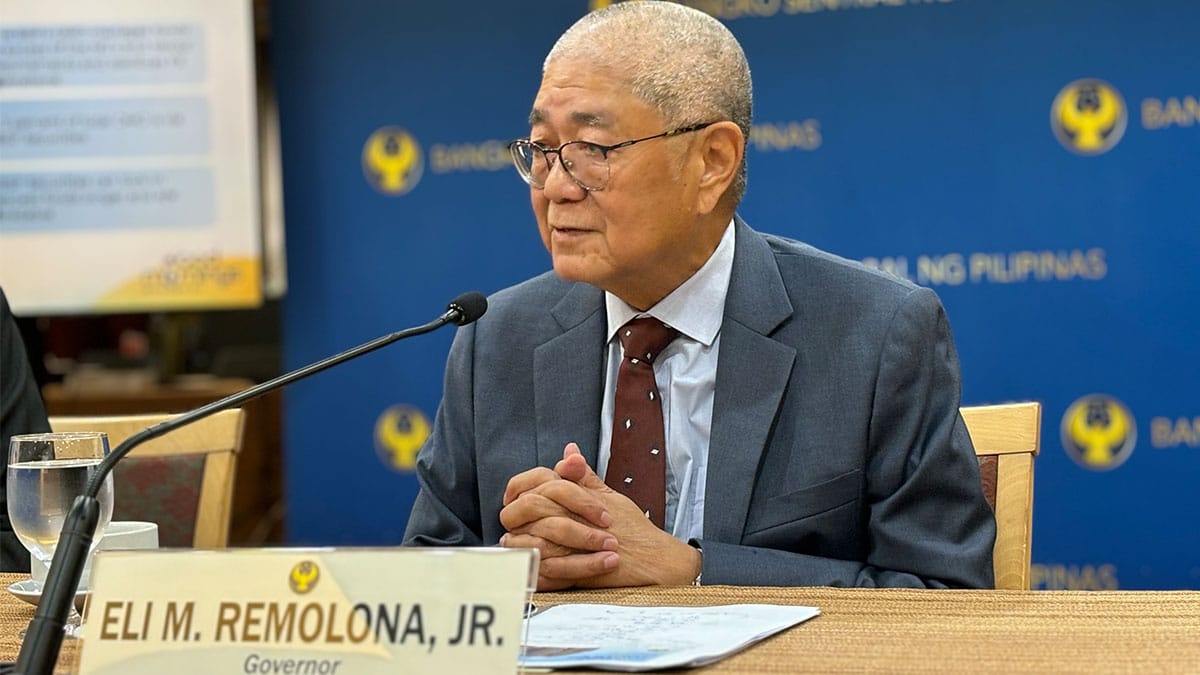
In its primer, the Bangko Sentral ng Pilipinas (BSP) explained that the law was enacted primarily to encourage the public to invest their money in government securities and deposit them in banks, discourage private hoarding, and enhance protection of privacy rights, especially during those times when the country needed capital and credit facilities to boost the economy after the ravages of World War II.
Meanwhile, Republic Act 6426, or the Foreign Currency Deposit Act, was enacted on April 4, 1972, and also contained the same bank deposit secrecy rule, but this time for foreign currency deposits. The law provides only one exception — the written permission of the depositor.
The BSP noted that this law was enacted at a time when one of the main economic challenges of the country was its unstable financial condition, greatly caused by heavy dollar spending. This in turn caused a dollar deficit in the country, as dollars were necessary to finance foreign currency liabilities and dollar-denominated transactions. Thus, it was imperative to attract deposits of foreign currencies in duly authorized banks by guaranteeing confidentiality.
It emphasized that since the enactment of these laws, the financial sector landscape has evolved such that financial innovations and ease of transactions have enabled and encouraged the public to place their money in banks, adding that the factual milieu then prevailing no longer exists and the objectives of the law to deter private hoarding and boost the economy have been deemed achieved.
In the report, the country’s central monetary authority also stressed that the language of existing laws on bank secrecy makes the Philippines the only country to still have a restrictive bank secrecy policy that makes it hard for the government to go after tax evaders and money launderers.
It noted that as early as 2011, the Group of Twenty or G20 declared that the era of bank secrecy is over, while in 2014, the Organization for Economic Cooperation and Development (OECD) released the standard for automatic exchange of information as the new global standard of obtaining detailed account information from financial institutions and exchanging that information automatically with other jurisdictions for the purpose of combating tax evasion, money laundering, and the commission of other crimes. This global regulatory watch, the BSP said, means lifting the cloak of bank secrecy.
It also cited a report from the IMF which mentioned that the existing bank deposit secrecy laws of the Philippines restrict the ability of the BSP to undertake effective supervision and undermine financial stability, financial integrity, and development of the banking sector, while exposing the banking system to reputational risk.
Last December, the House approved on second reading a bill amending the bank secrecy law by including among the exceptions cases where the inquiry or examination is to be made by the BSP in the exercise of its supervisory powers on the deposit of a stockholder, owner, director, trustee, officer or employee of an entity subject to BSP supervision or regulatory power, as well as the representative or agent, related party, or any conspirator involved.
This is, however, subject to the limitation that there must first be a determination by the Monetary Board of reasonable grounds to believe that fraud, serious irregularity or unlawful activity has been or is being committed by said persons and that it is necessary to look into the deposit to establish such activity. This authority of the BSP shall also apply in the course of its investigation of closed banks.
The results of such inquiry or examination by the BSP may be shared only with the Securities and Exchange Commission, the Philippine Deposit Insurance Corp., the Anti-Money Laundering Council, the Department of Justice and the courts, provided that such sharing is necessary to prevent or prosecute any offense or crime.
This exception shall also apply to foreign currency deposits in banks operating in the Philippines, including offshore branches of domestic banks, but not to non-stock savings and loan associations that cater only to their members.
The proposed amendment will also increase the penalty for violation of the bank secrecy law to imprisonment of not less than two years but not more than 10 years, or a fine of not less than P50,000 to not more than P2 million, or both, at the court’s discretion.
Meanwhile, Sen. Jinggoy Estrada filed last January Senate Bill 1047 to amend RA 1405 to allow the BSP to look into suspicious bank accounts linked to bribery, fraud, money laundering or other serious financial crimes. Just like the House version, the bill allows the BSP to examine bank deposits when there is reasonable ground to believe that fraud, serious irregularities or unlawful activities have been or are being committed and will apply to both peso and foreign currency deposits.
The bill provides stringent safeguards to prevent abuse, such as disallowing examination of bank deposits during an election period if it would prejudice any candidate.
Amending the more than 70-year-old bank secrecy law has received the backing of six major Philippine business groups, which said these laws continue to act as straitjackets on regulators, preventing them from efficiently undertaking measures such as investigating and prosecuting people involved in corruption and money laundering. These amendments, they said, will align the country with international standards on financial transparency and anti-money laundering.
But amending this law would not achieve this purpose unless other initiatives are taken, such as making the statements of assets, liabilities and net worth (SALNs) of government officials accessible to the public and adding to the list of covered persons under the Anti-Money Laundering Act more industries used for layering or legitimizing illicit funds, such as art and vehicle dealers.
Our laws and regulations should keep up with the times. But laws are only effective if enforced properly and with serious political commitment – and they should apply to all, including the rich and powerful.
For comments, email at [email protected]