 3 months ago
57
3 months ago
57

Upgrade to High-Speed Internet for only ₱1499/month!
Enjoy up to 100 Mbps fiber broadband, perfect for browsing, streaming, and gaming.
Visit Suniway.ph to learn
At the home of a Senate ally in December 2011, then-president Noynoy Aquino sat down with his key advisers to talk about the mega political battle that he started barely a year into his presidency: the impeachment of a chief justice. It was a go or no-go meeting. Two of them made one final effort to caution Aquino against doing it, saying it would cost him hefty political capital.
Aquino listened then walked to the garden for a smoke. Minutes after he settled back in, he asked for the draft of the Articles of Impeachment that lawyers had prepared, reviewed it, and then handed it to a Cabinet secretary present for final editing by wordsmiths in the coming weekend. By Monday, December 12, 2011, the House received a copy of the impeachment complaint from Malacañang, voted on it, and made the historic move of impeaching then-chief justice Renato Corona. The Senate, as an impeachment court, convicted Corona five months later. (Corona died in 2016.)
As president, Aquino made clear what he wanted — or did not want — in his presidency. It didn’t bother him, for instance, that the impeachment complaint was crafted by lawyers he himself had chosen and on his say-so. The status quo can’t go on, the president, who died in 2021, would say often. He was not oblivious to risks, such as those that accompanied his dogged pursuit of Corona, but he did not flee from them once he had set his mind on a goal.
I cite this to contextualize where President Ferdinand Marcos Jr. is today, as he enters the last two minutes of his term, which ends in June 2028.
Like Aquino, Marcos’ rule is marked by a historic impeachment of a nemesis. But unlike Aquino, Marcos did not know what he wanted in the process that’s now led to the upcoming trial of Vice President Sara Duterte, twice impeached by his allies.
Throughout his term, Noynoy Aquino embraced power and deftly deployed it, while Marcos Jr., in the past four years, has danced around it, choosing to kick the can down the road in critical instances. Which is a paradox, given how their parents have viewed and wielded power in their time.
Yet today, the sons of formidable fathers share a similar context at the end of their presidential terms: the prospect of a Duterte presidency.
Disastrous consequences
When Vice President Duterte was impeached the first time in February 2025, Marcos declared categorically that he had nothing to do with it, that it’s a waste of time. “Wala nga akong pakialam doon,” he told reporters. Yet, the House of Representatives, led at the time by his cousin, then-speaker Martin Romualdez, impeached Duterte with 215 votes, or more than what the Constitution required.
What president, with all the leverage and influence at this disposal, would allow what he did not want to happen, happen?
The consequence of that presidential waffling was brutal. It emboldened then-Senate president Chiz Escudero, who knew where Marcos stood (or did not stand), to drag his feet when the impeachment complaint reached the upper chamber, in effect tossing it to the Supreme Court. It also gave opening for justices, who knew where Marcos stood (or did not stand), to interpret the law according to the muddled signals that emanated from Malacañang. Duterte thus escaped her first impeachment trial.
Marcos had to wrestle with another decision: whether or not to hand over the other Duterte — Rodrigo — to the International Criminal Court (ICC), which issued an arrest warrant against the former strongman in April 2025. Up to the last minute, Marcos was torn and asked an adviser if there was a way the warrant could wait. Yet, all this time, Marcos was privy to the steps taken by domestic actors to strengthen the prosecutor’s case in the ICC that precisely made the warrant possible.
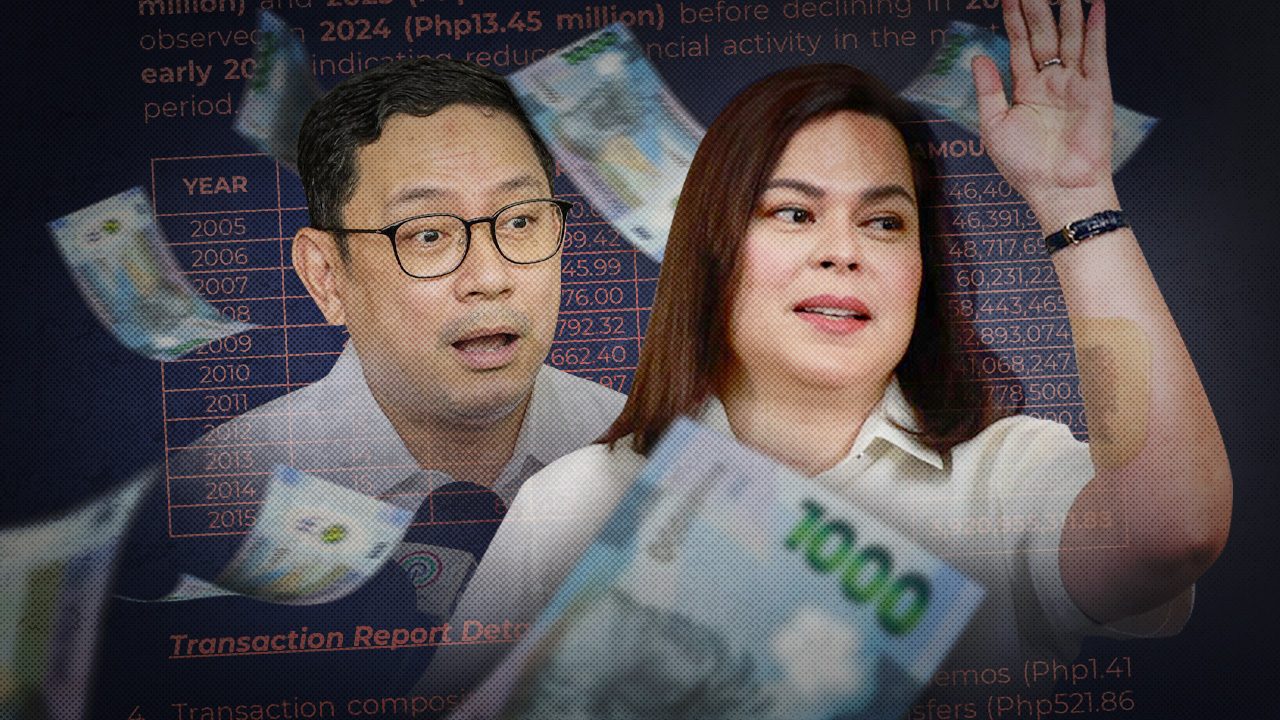
![[Newspoint] Bongbong and Sara’s intertwined fates](https://www.rappler.com/tachyon/2026/06/newspoint-sara-marcos-june-26-2026.jpg?fit=449%2C449)
The President has vacillated his way in the four years since he assumed the presidency in 2022. Those who have worked with Marcos say they have no trouble giving him advice or being listened to. He actually goes out of his way to consult others. The problem begins as soon as he steps out of the meeting room, ponders on an action point, gets waylaid by various voices, and crumbles under their weight.
Let’s take the case of former Philippine National Police (PNP) chief Nicolas Torre. With the scheduled retirement of General Rommel Marbil in June 2025, his logical replacement was any of the generals holding senior posts. Torre was not on Malacañang’s initial short list, but he had handed the government its twin victories: the arrest — despite all obstacles thrown his way — of both the elusive Pastor Apollo Quiboloy and former president Duterte.
The administration had just lost the midterms then, and they needed a win. Some advisers told the President that Torre would be the best choice for the job, and he agreed, promoting the general to the top post and annoying in the process the man who supervised the PNP: Interior and Local Government Secretary Jonvic Remulla, who did not like Torre. This unraveled in due time, as both engaged in their low intensity conflict.
Remulla eventually got the upper hand, and after barely three months on the job, Torre was sacked by Marcos — a first in the history of the PNP. What kind of leader takes such a big risk in an appointment only to be persuaded after a short period that he made a mistake?
Aquino’s flaw, on the other hand, was his stubborn insistence on keeping his friend, the controversial Alan Purisima, as PNP chief until the Ombudsman suspended him.
When algorithms shape outcomes
While they’re two different leaders, Marcos and Aquino both found themselves in a political space that’s more unwieldy and erratic than when their fathers battled it out.
Aquino stepped down in 2016, when Facebook had lost its safe space shimmer and enabled malign actors and networks to manipulate behavior, manufacture dissent, and shape political outcomes. Marcos, in fact, ended up benefiting from this via the well-oiled social media machinery provided by the Dutertes in their “Uniteam” 2022 campaign.
But now the President finds himself as a victim, his pronouncements and policies the instant inspiration of pages that run on invented names, as well as memes, fake videos, and AI-generated images and scripts. He has changed press secretaries four times in the last four years, but Malacañang can’t seem to crack the much-vaunted Duterte troll-and-bot machinery that’s taunting him online. It’s a game of whack a mole, that the administration appears bent on winning through legislation or police powers.
The online beast that reared its ugly head under Aquino is now a multi-headed hydra a decade later, hacking public discourse, empowering fraudsters, and turning nobodies and fake news peddlers like Kiko Barzaga into rock stars. Today’s politics, after all, now rewards performance more than competence, optics rather than outcomes.
It does not help Marcos at all when he leaves a lot of room for doubt, when he vows to punish the corrupt — as a performance — but is unable to deliver outcomes by his failure to put his own allies behind bars, and when he is neither here nor there.
Which brings us to the penultimate question that any president caught in a lame duck period is forced to confront: can he still shape the outcome of the next presidential race?
Does Marcos, like Aquino, still think that an administration machinery can deliver the vote for his chosen bet in 2028? The last time government machinery worked was a long time ago, when Gloria Macapagal-Arroyo won a tightly-contested presidential race in 2004, but we all know how that went: the exposé of her cheating machinery that dogged and weakened her until 2010.
Aquino and his Liberal Party thought the same in the 2016 elections: that their resources and machine could fix the poor numbers of his anointed one, especially in the face of the ragtag team that was cobbled together at the last minute by the foul-mouthed mayor from Davao. They didn’t know what hit them when the results came in.
Unlike Aquino, however, Marcos knows what’s going to hit him in 2028. He’s seen the Duterte train wreck, he knows it’s headed his way, and he still has the time and the wherewithal to, at the very least, derail it.
But can he? And would it still be up to him in the first place? Probably no longer. – Rappler.com