.png) 2 weeks ago
17
2 weeks ago
17

Upgrade to High-Speed Internet for only ₱1499/month!
Enjoy up to 100 Mbps fiber broadband, perfect for browsing, streaming, and gaming.
Visit Suniway.ph to learn
Public trust is the most valuable — and most fragile — asset in any society. When it erodes, the foundation of our economic and civic life begins to crack. We opened 2026 by confronting a challenge that belongs to all of us: the urgent need to rebuild that trust. This was the central theme of the Shareholders’ Association of the Philippines (SharePHIL) General Membership Meeting on March 13.
Setting the tone for the afternoon, SharePHIL president Conrado “Dino” Bate formally welcomed attendees by reminding them that market confidence cannot exist without trust, and that trust is earned quietly and consistently. He then acknowledged new institutional and regular members, along with the incoming Board of Trustees, emphasizing that corporations are uniquely positioned to model this accountability.
Underscoring this commitment to actionable transparency, the opening ceremonies also featured a landmark Memorandum of Understanding signing with GCash to democratize investing knowledge through the “Share the Wealth” and Project RISE platforms.
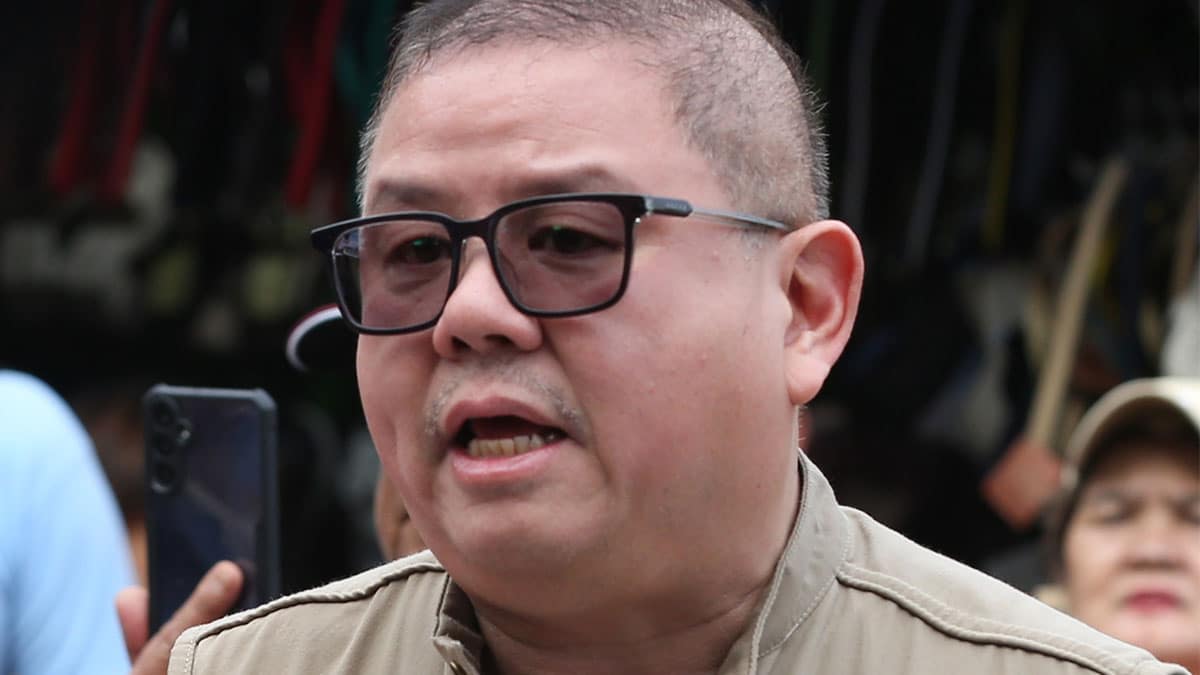
In his keynote address, former Public Works Secretary Rogelio “Babes” Singson delivered a stark, uncompromising look at the realities we face. Drawing from his long experience in both government and private enterprise, Singson did not mince words. He warned that we are navigating an economic “perfect storm” — geopolitical tensions straining global oil supplies, persistent inflation, shifting labor markets and a slowdown in infrastructure spending. For the average Filipino, the pain points are multiplying rapidly.
In the face of systemic corruption and economic uncertainty, who bears the responsibility of rebuilding public confidence?
Singson’s answer was an unequivocal challenge to the business community: the private sector cannot afford to be a passive bystander. We possess the “muscle,” the permanence, the long-term vision and the flexibility that government — subject to the volatile tides of political cycles — often lacks. To wield this muscle effectively, however, corporate boards and business executives must adopt a framework he calls “REAL” leadership.
The acronym serves as a practical, uncompromising blueprint for modern governance. First, leaders must be Relevant. Organizations must deeply understand the daily struggles of their stakeholders. Whether it is the riding public battling transportation bottlenecks or employees contending with compressed work schedules and high consumer prices, leadership must address what is truly essential today.
Second, they must be Engaging. Relevance is impossible without genuine connection. Leaders must step out of their ivory towers and listen to the communities they serve. Singson recounted his time at the DPWH and Maynilad, where he had to make difficult decisions about personnel. Rather than hiding behind memos, he directly engaged with labor leaders, explaining the need for change and offering a path forward. Today, this means making a concerted effort to understand what drives the modern workforce — particularly Generation Z, whose standards and pain points differ markedly from those of previous generations.
Third, leaders must Act with fairness, compassion and courage. True courage sometimes means being willing to walk away from a comfortable position rather than compromise one’s values. It requires demanding absolute accountability and firmly rejecting the convenient legal shield of the “presumption of regularity.” Singson shared a sobering example from Bulacan, where auditors and local officials turned a blind eye to anomalies, allowing everyone involved to profit illegally under the guise of regular bureaucratic procedure. Corporate governance must actively dismantle such complacency.
Finally, they must Lead by example. Integrity is tested and proven in the smallest of actions. If corporate executives expect punctuality, transparency and simplicity from their organizations, they must be the first to walk the talk. As Singson bluntly put it: if you call a meeting for 9:00 A.M., you must be there before the hour strikes. Adopting a simple lifestyle — and declining to flaunt wealth — builds an authentic connection with the people you lead.
Singson famously applied these principles through his “5 Rs” framework for infrastructure, demanding that resources be spent on the Right project, at the Right cost, with the Right quality, Right on time, and by the Right people. Yet he passionately highlighted a critical missing piece in our national recovery: the civic-mindedness of the Filipino people.
During the open forum, a poignant point was raised about the country’s economic trajectory. In the 1960s, the Philippines trailed only Japan in GDP per capita in Asia. Today, we have been overtaken by our neighbors — a decline widely attributed to an endemic culture of corruption that has evolved from overpricing to outright “ghost projects.” Singson lamented that while earlier generations of students would take to the streets over modest tuition hikes, today’s youth are having their futures stolen while remaining silent — distracted by social media and organized online trolls.
To combat this apathy, Singson championed Bisto Proyekto, a citizen-powered reporting initiative launched in February 2026 by TAPAT (Taongbayan Action for Participatory, Accountable and Transparent Governance), aimed at reviving grassroots vigilance. By democratizing information and giving local communities a digital checklist to monitor infrastructure projects in their own backyards, the initiative seeks to awaken a modern form of civic duty.
He challenged the private sector to throw its considerable weight behind such movements, urging corporations to direct their Corporate Social Responsibility resources toward educating the youth and building communication networks that counter systemic disinformation.
This call for grassroots vigilance and transparency resonates deeply with SharePHIL’s core mission of corporate governance and retail investor protection. Transparency cuts both ways. Just as citizens must be empowered to spot anomalies in their local municipalities, the investing public must be armed with unbiased, high-quality learning materials to navigate the capital markets safely.
Ultimately, the message from our first gathering of the year is one of profound accountability. We can lament the state of systemic corruption and institutional decay, but unless we actively demand honesty and integrity from both our elected officials and our corporate boards, the cycle will perpetuate itself. Our businesses outlast electoral terms. Our obligations to our employees, our communities and our minority shareholders demand a permanence of character. We must not merely comply with minimum regulatory standards; we must be the architects of the gold standard for integrity.
Echoing this sentiment to close the afternoon, SharePHIL chairperson Aurora “Boots” Geotina-Garcia reminded the audience that the solutions to these systemic issues lie largely within the private sector’s control. Rebuilding public trust is not a spectator sport. The blueprint is in our hands, the challenge has been raised and it is time for the private sector to lead by example.