1 hour ago
4
1 hour ago
4

Upgrade to High-Speed Internet for only ₱1499/month!
Enjoy up to 100 Mbps fiber broadband, perfect for browsing, streaming, and gaming.
Visit Suniway.ph to learn
Already have Rappler+?
to listen to groundbreaking journalism.
This is AI generated summarization, which may have errors. For context, always refer to the full article.
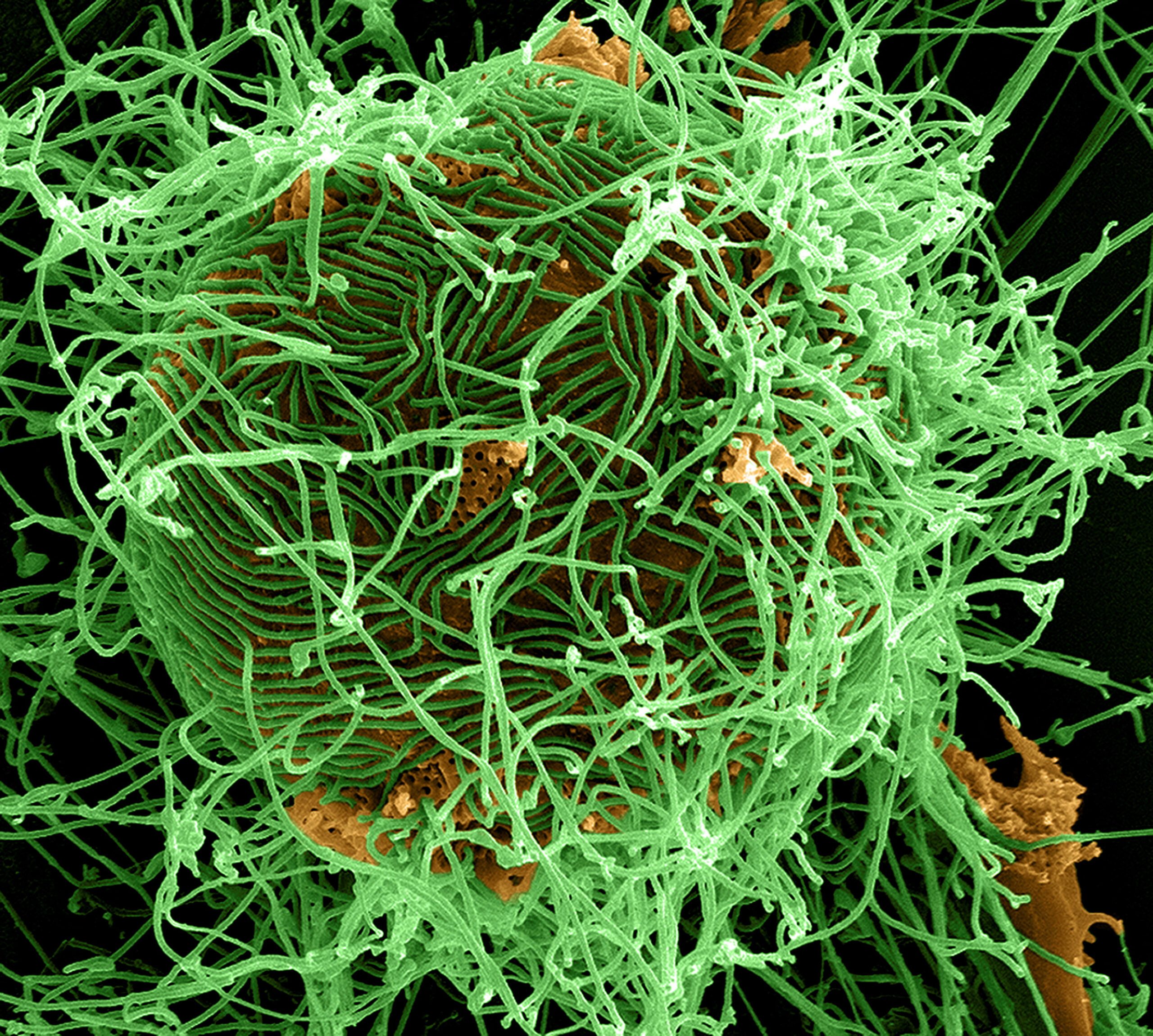
BUDDING. A digitally colorized scanning electron micrograph depiction shows numerous filamentous Ebola virus particles in green, budding from a chronically infected VERO E6 cell in orange at 25,000X magnification in this undated handout picture from the National Institute of Allergy and Infectious Diseases.
REUTERS
A small number of experimental vaccines and therapies are being assessed, while global health authorities are also reviewing whether existing Ebola treatments might offer any protection, though evidence remains limited to animal studies
Global health authorities are racing to identify medical options to contain an Ebola outbreak in eastern Democratic Republic of Congo linked to the Bundibugyo strain of the virus.
Unlike the more common Zaire strain, there are no approved vaccines or treatments for Bundibugyo.
About 600 suspected cases and 139 suspected deaths have been reported in the outbreak, and the World Health Organization has warned the numbers are likely to rise. Bundibugyo ebolavirus (BDBV) has a fatality rate of up to 40%.

A small number of experimental vaccines and therapies are being assessed, while global health authorities are also reviewing whether existing Ebola treatments might offer any protection, though evidence remains limited to animal studies. Most candidates have not yet been tested in humans and would require emergency or compassionate-use authorization.
Vaccines
- A Bundibugyo-specific vaccine, rVSVΔG/BDBV-GP, based on the same platform as Merck’s approved Ebola Zaire vaccine Merck & Co. Ervebo, has shown survival benefits in non-human primates in a 2023 study. Researchers at the University of Texas Medical Branch say development discussions are ongoing, with a WHO-indicated timeline of six to nine months for manufacturing.
- A second candidate using ChAdOx1 technology, also used in the Oxford-AstraZeneca COVID-19 vaccine AstraZeneca, is being produced by the Serum Institute of India under an emergency response framework with CEPI and the University of Oxford. Initial doses could be ready within two to three months, though further testing is still required.
Antibody-based therapies
- Mapp Biopharmaceutical is developing MBP134, a combination monoclonal antibody treatment supported by the US Biomedical Advanced Research and Development Authority (BARDA). Early studies show activity against multiple ebolavirus species, and the agency is coordinating potential deployment for high-risk exposures.
- Another candidate antibody, BDBV289-N, derived from Bundibugyo survivors, showed up to 100% protection in animal studies, even when treatment began days after infection.
Antiviral drugs
Gilead Sciences’ remdesivir has shown laboratory activity against Bundibugyo, with some evidence suggesting stronger performance than against the Zaire strain. The company has not commented on its potential use for this outbreak.
Diagnostic tests
Limited testing capacity has slowed response efforts, but several tools are in use:
- BioFire Defense, an affiliate of bioMérieux, produces an FDA-cleared multiplex test that can detect multiple Ebola species, including Bundibugyo.
- Germany-based Altona Diagnostics’ RealStar Filovirus Screen RT-PCR Kit is being used in Congo and has increased production to support expanded testing needs.
– Rappler.com
How does this make you feel?
Loading