.png) 1 week ago
9
1 week ago
9

Upgrade to High-Speed Internet for only ₱1499/month!
Enjoy up to 100 Mbps fiber broadband, perfect for browsing, streaming, and gaming.
Visit Suniway.ph to learn
Energy uncertainty means economic uncertainty. The ongoing war in the Middle East started by the US-Israel against Iran last Feb. 28 led to Iran hitting back at Israel and US military bases or facilities in Saudi Arabia, United Arab Emirates, Qatar, Bahrain, Kuwait, Jordan and Iraq.
These are oil-gas producing and exporting countries. Choking of the Strait of Hormuz has worsened the situation. So by-products of crude oil and gas — from gasoline, diesel, LPG, LNG, fertilizers, industrial and petrochemical products — prices have jumped high.
These energy, industrial, agricultural price shocks need to be mitigated somewhere. One such absorbent infrastructure is digital finance. How? Via easier transactions payment, with transparent paper trails done in real time. This reduces cost of financial transactions, people save money and time.
Bangko Sentral ng Pilipinas (BSP) data show that in 2025, digital payments accounted for 72 percent of payments made by individuals. Meaning less cash transactions mostly done by oldies like me who still prefer to pay in cash whenever possible.
The Philippines built one of Southeast Asia’s most active digital payments ecosystems in the last decade. Millions of Filipinos now use mobile platforms to send money, pay bills, receive remittances and support small businesses. National platforms like GCash, May, and other local payment systems have integrated into regional platforms like Grab.
I often pay my purchases by cash but I also occasionally receive payments or make payments via GCash. It is clear that tens of millions of Filipinos have GCash account doing transactions from petty amount of less than P100 to tens of thousands of pesos including remittances by OFWs. Both volume and scale of transactions are large.
Technological innovation was made by the private players themselves but regulatory facilitation while setting safegards for public protection was made by the BSP. That thing QR Ph is good, it introduced interoperable digital payments, standardized QR code across banks and e-wallets covering all from micro-small-medium enterprises (MSMEs).
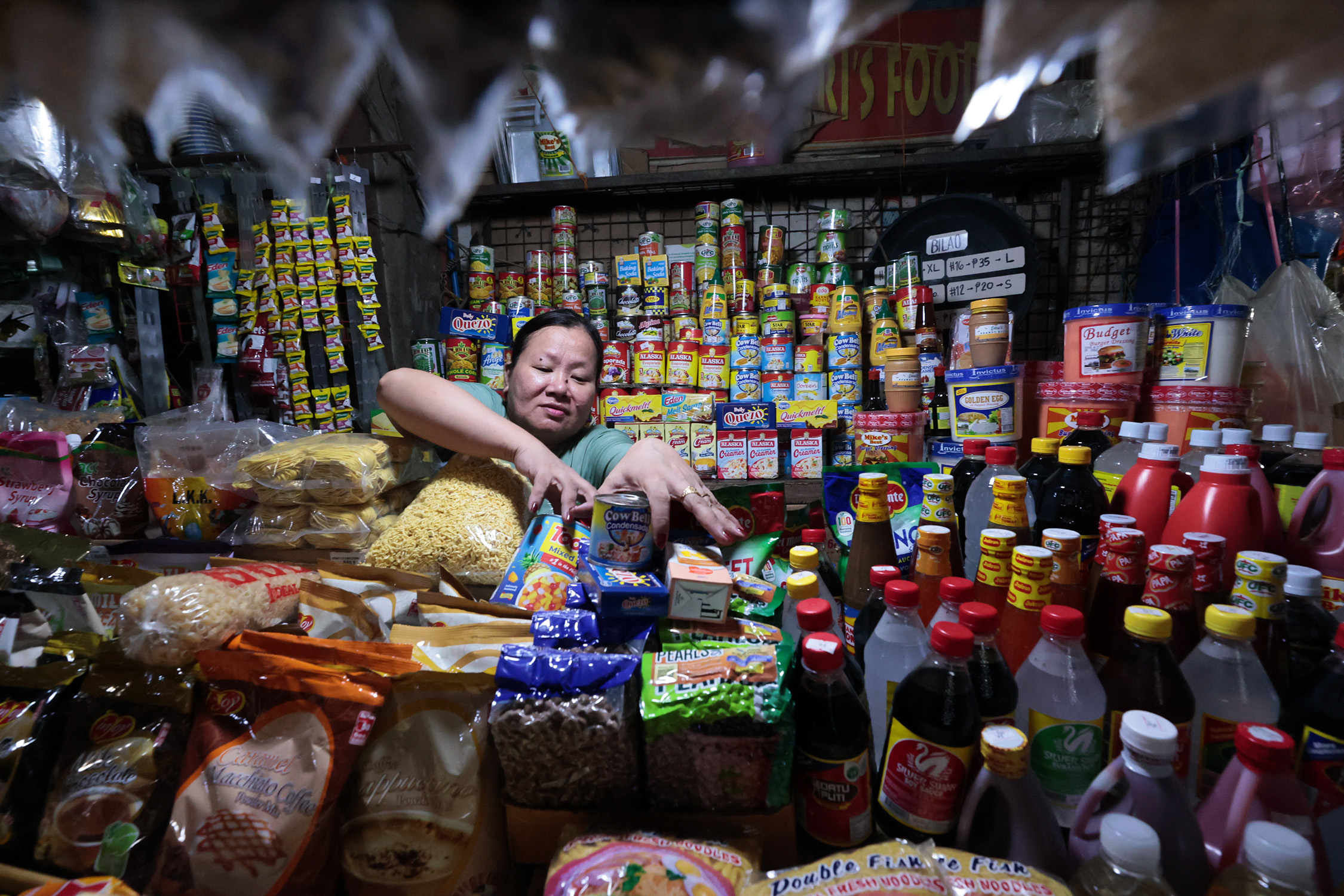
Small retailers are among the biggest beneficiaries. A survey by Packworks found that e-wallet usage among sari-sari stores have increased by 75 percent in the past year, largely driven by growing consumer demand for cashless transactions. Interoperable systems such as QR Ph allow small merchants to accept payments from multiple wallets and banking apps, enabling them to participate more actively in the digital economy.
I checked the value and percent changes of M1, the most liquid measure of money supply in an economy. This is money that is immediately available for spending like physical currency (banknotes and coins) in circulation, demand deposits (checking accounts), and other checkable deposits. There are also M2, M3, M4 but M1 is the narrowest, most liquid money supply.
Then I chose large population Asian countries, those with 100 million and more people. Over the past 10 years, 2015 to 2025, even January 2016 to January 2026 for some countries. Here is what I saw.
Vietnam M1 from 1.46 trillion dong in 2015 to 4.32 trillion dong in 2025, threefold increase. Indonesia from one trillion rupiah to 3.4 trillion rupiah same period, 3.4 times increase. India from 23.5 trillion rupee to 73.7 trillion rupee, fourfold increase. Pakistan from 9.25 trillion rupee in January 2016 to 36.9 trillion rupee in January 2026, fourfold increase. Philippines from P2.5 trillion in January 2016 to P7.58 trillion in January 2026, threefold increase.
So we are at similar level of money supply expansion as Vietnam but lower than Indonesia, India, Pakistan. Japan and South Korea have less than double expansion of M1 over 10 years.
The limited expansion of our M1 is another indicator that demand and supply for hard peso cash and checking accounts have lesser appetite now, more people have shifted to digital payment transactions.
Digital payments help improve the efficiency of the broader economy by making financial transactions move quicker and safer, more transparent. Businesses operate more smoothly, transactions become easier to track, and more economic activities enter the formal economy. This is particularly important for MSMEs.
There are millions of Filipino workers and professionals in the Middle East, mainly in Saudi Arabia and UAE. I read that GCash has waived certain remittance-related fees to help OFWs send money home more easily amid uncertainty in parts of the Middle East. I also read that PLDT has offered free calls for limited time for Filipinos here calling their folks in the Middle East.
Actions like these show how digital financial platforms can respond quickly during geopolitical tensions and uncertainties. These reduce tension and anxieties for Filipinos in both ends of Asia.
Meanwhile UAE finance and tourism is badly affected. UAE has six of the top 60 largest and wealthiest sovereign wealth funds (SWFs) in the world with combined assets of some $2.2 trillion, which is 1,000 times larger than our SWF, the Maharlika Investment Corp’s $2 billion assets.
I see further outmigration of UAE funds to more stable regions like the ASEAN, and the Philippines has an existing Comprehensive Economic Partnership Agreement (CEPA) with UAE already, the only free trade agreement the Philippines has among Middle East countries.
Should that investment flows from UAE to the Philippines start getting larger, digital payments will play a big role not only in projects themselves but also among people.
Additional technological innovation by the private players, more regulatory liberalization by the BSP and continued collaboration between the two will contribute to growing trust among millions of Filipino users and foreign investors.
Geopolitical uncertainties in the Middle East and other parts of the world will never go away. We can only anticipate those and lay down digital infrastructures that will help mitigate the economic and financial uncertainties for our people.