 5 months ago
65
5 months ago
65

Upgrade to High-Speed Internet for only ₱1499/month!
Enjoy up to 100 Mbps fiber broadband, perfect for browsing, streaming, and gaming.
Visit Suniway.ph to learn
Alexis Romero - The Philippine Star
April 10, 2026 | 12:00am
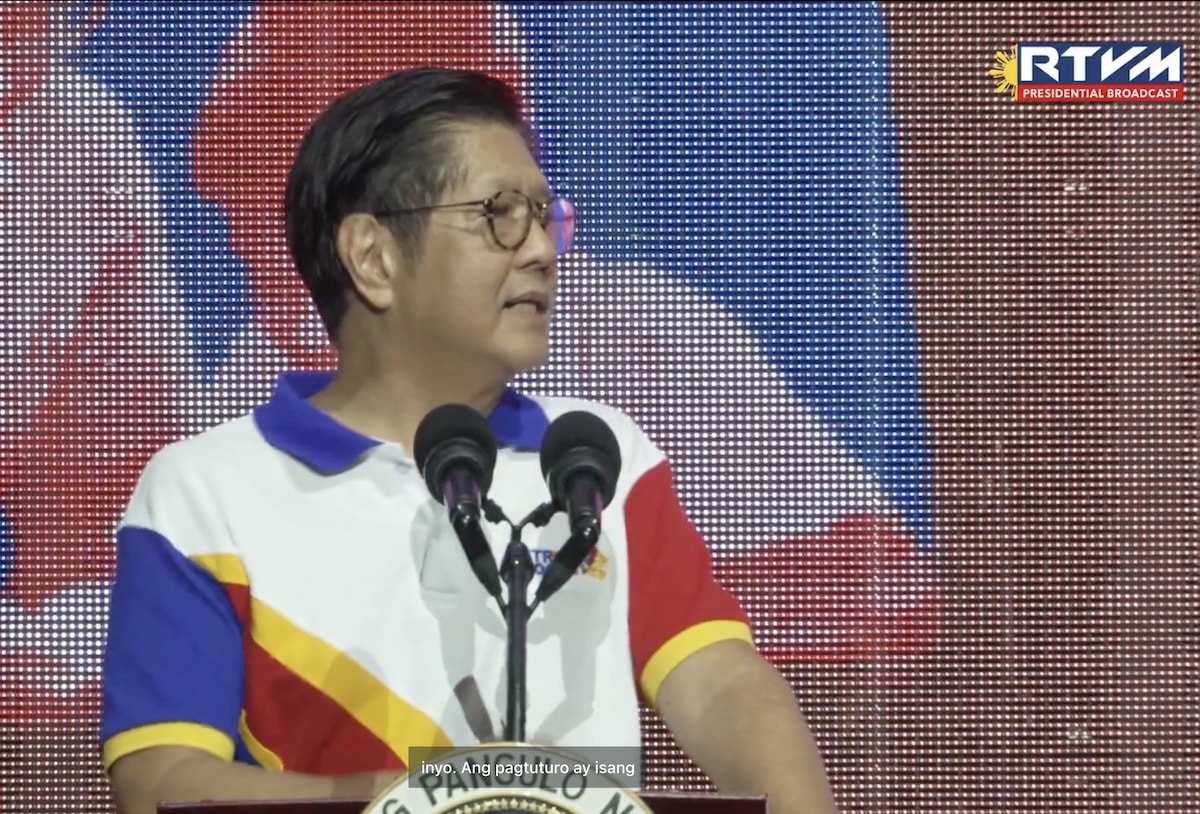
MANILA, Philippines — President Marcos yesterday announced a fresh set of assistance for the transport sector and commuters, as well as for the country’s 42,000 barangays as part of the government’s Middle East conflict response measures.
But a decision on fuel excise taxes – the subject of Cabinet officials’ recent meetings – was noticeably not mentioned in his announcement.
In a video message, Marcos said the transportation department would carry out a service contracting program that would augment the income of drivers starting April 15. Under the program, operators and drivers of public utility vehicles (PUVs) would receive P40 to P100 per kilometer as part of the efforts to soften the impact of soaring fuel costs.
Commuters will also be given at least a 20 percent fare discount in trips that are connected to trains and
primary bus routes. “This will be implemented nationwide,” the President said.
Marcos has also directed the distribution of P8 billion to the country’s 42,000 barangays. Each barangay will be given P200,000 for educational, social and economic projects under the program, which was launched last March 24.
The service contracting program, meanwhile, would be implemented during off-peak hours to ensure that transportation remains available outside rush hours. Some 50,000 PUVs, 1,000 operators and 15 million passengers are expected to benefit from the initiatives. Participating PUVs would be subjected to GPS monitoring to ensure compliance and efficient delivery of transport services.
Aside from additional income, PUV drivers would also be given a P10-per-liter subsidy in the next three months. The fuel subsidy program, to cover up to 150 liters of gasoline for each PUV every week, would be launched in Metro Manila next week.
The government will start implementing the program along Commonwealth Avenue before expanding it to Quezon Ave., España, Zapote, A. Bonifacio, Rizal, Marcos Highway and the rest of the country. The fuel subsidy would be available at gasoline stations approved and monitored by the energy department to prevent abuses.
“This is important because we are not just responding to transport costs. We are also preventing increases in the prices of food and other primary commodities,” Marcos said.
“Every decision we make only has one goal: to protect the Filipinos.”
Each barangay, meanwhile, would be given P200,000 for educational, as well as for social and economic projects.
A total of 5,000 barangays constituted the first batch of beneficiaries, according to a statement issued by the office of Executive Secretary Ralph Recto.
“Direct support will be given to barangays. The President’s order is to strengthen them because they are the frontliners and they are closest to the people. They see the problem first. They also have the capacity to act immediately,” Recto said.
A barangay can spend half of the assistance or P100,000 for projects enumerated in a menu, including street lights, patrol vehicles, CCTVs and power generators.
The other half may be used to bankroll a “finisher program” for college seniors so that their graduation would not be delayed by the effects of the war in the Middle East. Up to 200,000 graduating college students would be saved from economic dislocation that might force them to drop out of school, according to Recto’s office.
“We are protecting the dreams of students who are already within reach of graduation,” the executive secretary said.
The distribution to barangays must be completed before June 2026 and all funds must be used by the end of the year. The interior and local government department has been tasked to oversee the implementation of the program.
Marcos’ video message did not mention anything about the reduction or suspension of the excise tax on petroleum products, which was discussed by the Development Budget Coordination Committee this week.
Last month, the President signed into law a measure allowing him to suspend or cut excise taxes on petroleum products once Dubai crude oil price reaches or exceeds $80 per barrel for a month.
Under the law, any suspension or reduction of fuel excise taxes can only last up to three months, but not more than a year in total. Taxes will automatically return to their original rates either a week after the one-month average Dubai crude oil price decreases to below $80 per barrel, as certified by the energy department, or after three months—whichever comes first.