.png) 2 months ago
24
2 months ago
24

Upgrade to High-Speed Internet for only ₱1499/month!
Enjoy up to 100 Mbps fiber broadband, perfect for browsing, streaming, and gaming.
Visit Suniway.ph to learn
People often talk about how prices keep going up. Fuel is higher. Rent is more expensive. Food, tuition and haircuts cost more. Even simple home repairs can make your wallet whisper, “please be gentle.”
And yet, strangely, some things have become cheaper and better.
Television sets today are bigger, clearer, thinner and smarter, yet often cost less than the bulky TVs families once displayed proudly in the living room. Phones now carry more computing power than older machines that used to occupy entire rooms.
So why does a haircut keep getting more expensive while a TV gets cheaper?
The answer is not just inflation. It is economics quietly working behind the scenes.
Alex Mayyasi’s book, ‘Planet Money: A Guide to the Economic Forces That Shape Your Life,’explains that the economy is not controlled by one person sitting behind a giant dashboard. It is an evolving system in which prices convey information, technology reshapes work and geography shapes opportunity more than many people realize.
This matters because many people today feel anxious. Their paychecks feel smaller. Their bills feel larger. Their jobs are changing faster than expected.
But when we understand the forces behind these changes, we can make better choices rather than merely feel like passengers in a speeding bus with no seatbelt.
One helpful idea is this: a price tag is like a tiny newspaper.
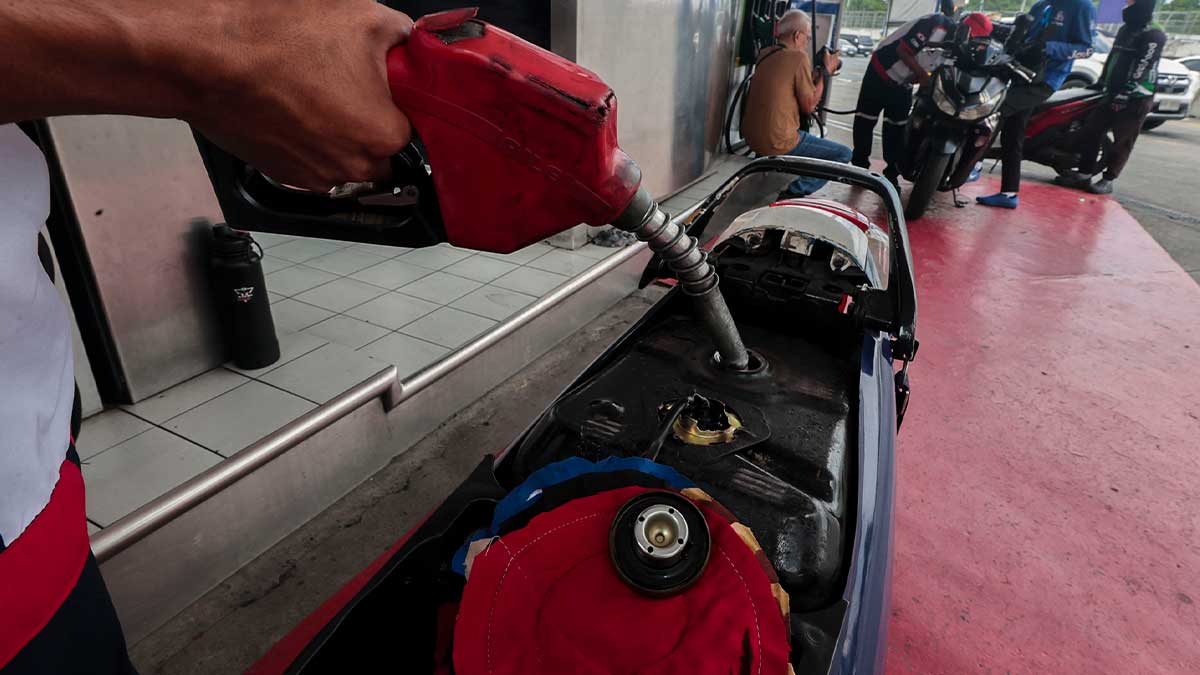
When gasoline prices rise, they tell a story. Maybe the oil supply is tight. Maybe more people are traveling. Maybe global conflict is disrupting supply. Maybe all these things are happening at the same time.
Most consumers do not know the full story, but the price tag summarizes the information. Prices tell us what is scarce, what people want, and what may need to change.
They also affect behavior. When fuel becomes expensive, people may drive less, combine errands, or look for alternatives. Suppliers, on the other hand, may try to produce or distribute more.
Knowing this does not make higher prices enjoyable. Nobody smiles at a gas station and says, “What a fascinating economic signal.” Most of us still groan.
But at least we understand that prices are not just punishments. They are signals.
Another important idea is that technology usually automates tasks, not entire jobs.
When banks introduced ATMs in the 1970s, many expected bank tellers to disappear. But for many years, the number of tellers actually increased.
Why?
Because ATMs took over only certain tasks. Human tellers then focused on what machines could not do well: customer service, advice, relationship-building and sales. ATMs also made branches cheaper to operate, allowing banks to open more locations.
This is an important lesson for the age of AI.
AI can help with reports, drafts, summaries, schedules, customer questions and routine analysis. But it cannot fully replace wisdom, trust, judgment, leadership, empathy and human warmth.
The question is not, “Will technology change my job?” It will.
The better question is, “Am I changing fast enough to stay valuable?”
Technology makes it easier to produce physical goods such as TVs, cars, appliances and gadgets. Production improves. Scale increases. Costs go down.
But services are different.
A haircut still requires someone’s time, skill and attention. Childcare requires real people. Health care requires trained professionals. Home repairs require workers.
As societies become wealthier, labor costs rise and services become more expensive. Machine-made goods often get cheaper. Human-centered services often cost more.
This reminds us that human time cannot be mass-produced. Attention cannot be copied infinitely. Real care costs more because it still requires a person.
Another economic shift is the winner-take-all economy.
Before recordings and streaming, people hired local musicians. The best singers earned more, but not unimaginably more. Today, billions can listen to the world’s top artists instantly. A few at the top gain massive rewards, while many talented people struggle.
This happens in many fields. Technology gives the most visible people enormous reach. That creates opportunity, but also tougher competition.
Passion matters, but market structure matters too.
Dreams are important, but dreams need math.
Finally, place matters.
Opportunity is not evenly distributed. Some cities, communities, and industries offer better growth because they have networks, mentors, companies, and social connections.
And place is not only geography. The people around you are also a kind of place.
If you are surrounded by negative people, growth becomes harder. If you are surrounded by learners, builders, mentors, and people of character, growth becomes easier.
So, what should we do?
Upgrade your skills before change forces you to. Choose your career arena wisely. Place yourself where growth can happen. Stay curious.
Prices move. Technology advances. Industries shift. Opportunities cluster.
The prepared person does not merely ask, “Why is everything becoming more expensive?”
The prepared person asks, “What is this change teaching me, and how can I become wiser because of it?”
That question may not lower your haircut bill.
But it may raise the value of your future.
***
Join my one-day Level Up Leadership (Agile. Able. Adaptive.) seminar-workshop on June 18 at the beautiful Balmori Suites, Rockwell, Makati. This one-day learning experience is designed for leaders, managers, entrepreneurs, business owners and professionals who want to lead with greater clarity, confidence, courage and competence in a disrupted world. Seats are limited. Contact April (+63 928 559 1798) or Sylene Alonzo (+63 976 638 8974) or visit www.levelupleadership.ph.