 1 hour ago
4

Upgrade to High-Speed Internet for only ₱1499/month!
Enjoy up to 100 Mbps fiber broadband, perfect for browsing, streaming, and gaming.
Visit Suniway.ph to learn
NEGROS OCCIDENTAL, Philippines – Bacolod City’s Barangay 13 did not win the MassKara Festival’s grand street and arena dance competition on Sunday, October 18. But as the other groups competed for prizes, its dancers brought something less comfortable to the celebration: a portrait of a city struggling with corruption issues, rising prices, a power crisis and failing public services.
The group was the only one among eight barangay contingents to build its performance around the problems facing Bacolodnons, projecting those realities on a giant billboard as dancers moved before thousands of spectators at SM City Bacolod. The performance also reached many viewers watching online from elsewhere in the Philippines and abroad.
Its presentation was a departure from the festival’s familiar display of colorful costumes, elaborate props and choreographed smiles, serving as a reminder that behind Bacolod’s reputation as the “City of Smiles” are people facing crises that do not disappear when the music starts.
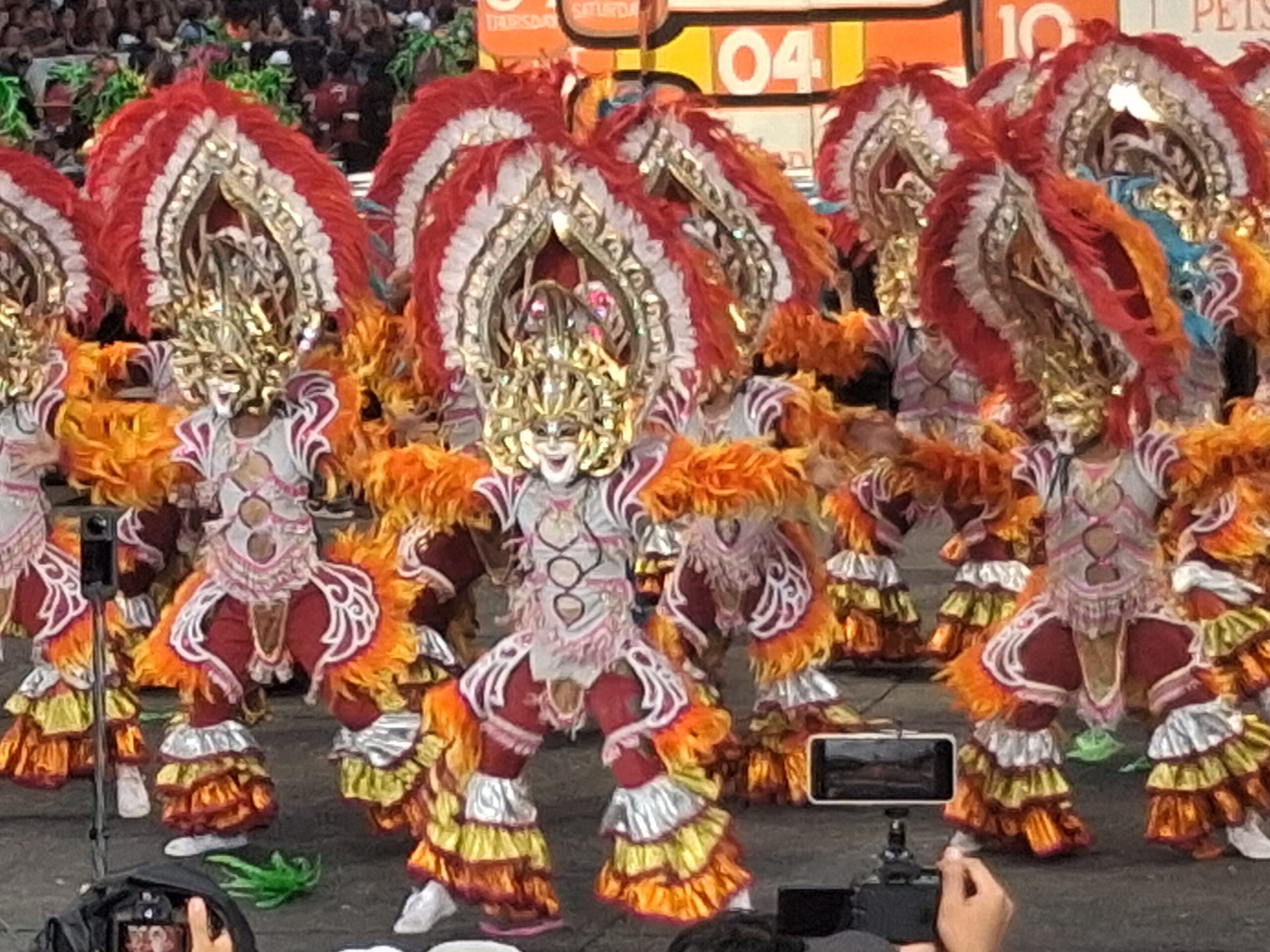 THE CHAMPIONS. Barangay Taculing dancers perform their routines en route to winning the barangay category of this year’s MassKara Festival street and arena dance competition. The contingent takes home the P1 million cash prize. Ambo Delilan/Rappler
Showing realities
Under the direction of Chloe Jan Lorca Gavin and Edrian Conde, Barangay 13’s performers brought Bacolod’s troubles to the MassKara stage: systemic corruption, a flood-control scandal, inflation, power shortages across the Visayas, poor water services, drug addiction and other health concerns.
The presentation came amid mounting public scrutiny of P300 million in Tourism Infrastructure and Enterprise Zone Authority projects, an unfinished probe into alleged P5 billion in flood-control projects, and P6.1 billion in loans incurred under two past city administrations.

Bacolod, the capital of Negros Occidental, is also seeing a red-striped soft scale insect (RSSI) infestation that has damaged about 2,000 hectares of sugarcane farms across 10 rural barangays, causing estimated losses of more than P200 million.
The city was placed under a state of calamity on August 5. On October 10 and 11, the Department of Social Welfare and Development’s Negros Island Region office provided P10,325 each to 2,957 affected sugarcane farmers and laborers through its Emergency Cash Transfer program.
Conde said the group did not intend to insult public officials watching from the stage or turn its performance into a political statement – it merely wanted to show what residents were experiencing.
“We only showed what is happening in our area, and that is our concept of love for victory,” he said in Hiligaynon in an interview with Rappler on Monday, October 19.
Conde added: “Amon man ginpakita nga ang kadalag-an indi lang makita sa mga medalya kundi makita taman ko paano ‘ta atubangun ang mga problema.”
(We also showed that victory is not only seen in medals, but also in how we face problems.)
The performance, he said, moved from ugly realities toward a more hopeful conclusion. In that lay the festival’s central idea: resilience in the face of adversity.

‘Candid artistry’
Wilson Gamboa Jr., convener of the Amlig Tublig and Amlig Kuryente groups, said Barangay 13’s artistic concept and design deserved respect.
“They just communicated the ideas about society, civic identity and political and economic circumstances in Bacolod,” Gamboa said.
He said the performance was about escaping harsh realities and celebrating hope and resilience.
“So, nothing wrong with that candid artistry,” he said.
Another, Christian John Weber, said Barangay 13’s performance echoed the call to address national and local issues affecting Bacolodnons.
“Its theme, indeed, needs to be appreciated and respected,” Weber said.
But at the end of the day, it was the group from Taculing which won the MassKara Festival street and arena dance competition in the barangay category and bagged the top prize, followed by Mandalagan and Handumanan as first and second runners-up, respectively.
Mandalagan Elementary School and Bacolod City National High School won in the school category at their respective levels, while the group from Barangay Tangub topped the Electric MassKara float parade.
With Bacolodnons and many worldwide watching the street dancing at the SM City grounds and online, Bacolod Mayor Greg Gasataya said MassKara had turned into a world-renowned festival, turning tragedy into resilience and, ultimately, revelry.
Gasataya said MassKara serves as a compass for Bacolodnons as they confront various challenges and crises. He said the festival allows them to showcase their resilience to the Philippines and the world.
The three-day festivities featured the Electric MassKara float parade on October 16, followed by street and arena dance competitions for school and barangay contingents on October 17 and 18, respectively.
Colorful floats, costumes, headdresses and props showcased Bacolod artisans’ creativity, while the street and arena performances made MassKara more than a celebration.
Wallace Minn-Gann Chow, representative of the Taipei Economic and Cultural Office (TECO) in the Philippines, said he was amazed by the performances in the barangay category.
“This is my first time to witness MassKara, and I find it very amazing,” he told Rappler.
Chow and his wife, Samantha Tai, were among the top guests at the MassKara street and arena dance competitions on October 17 and 18.
MassKara was coined from the English word mass or a multitude of people, and the Spanish word cara, meaning face.
Started 46 years ago amid two major crises – the near-collapse of the Negros sugar industry and the MV Don Juan sea tragedy between Mindoro and Romblon, which claimed roughly 180 lives – the festival’s origins echo the challenges Bacolod faces today. – Rappler.com