
 1 month ago
53
1 month ago
53

Upgrade to High-Speed Internet for only ₱1499/month!
Enjoy up to 100 Mbps fiber broadband, perfect for browsing, streaming, and gaming.
Visit Suniway.ph to learn
Already have Rappler+?
to listen to groundbreaking journalism.
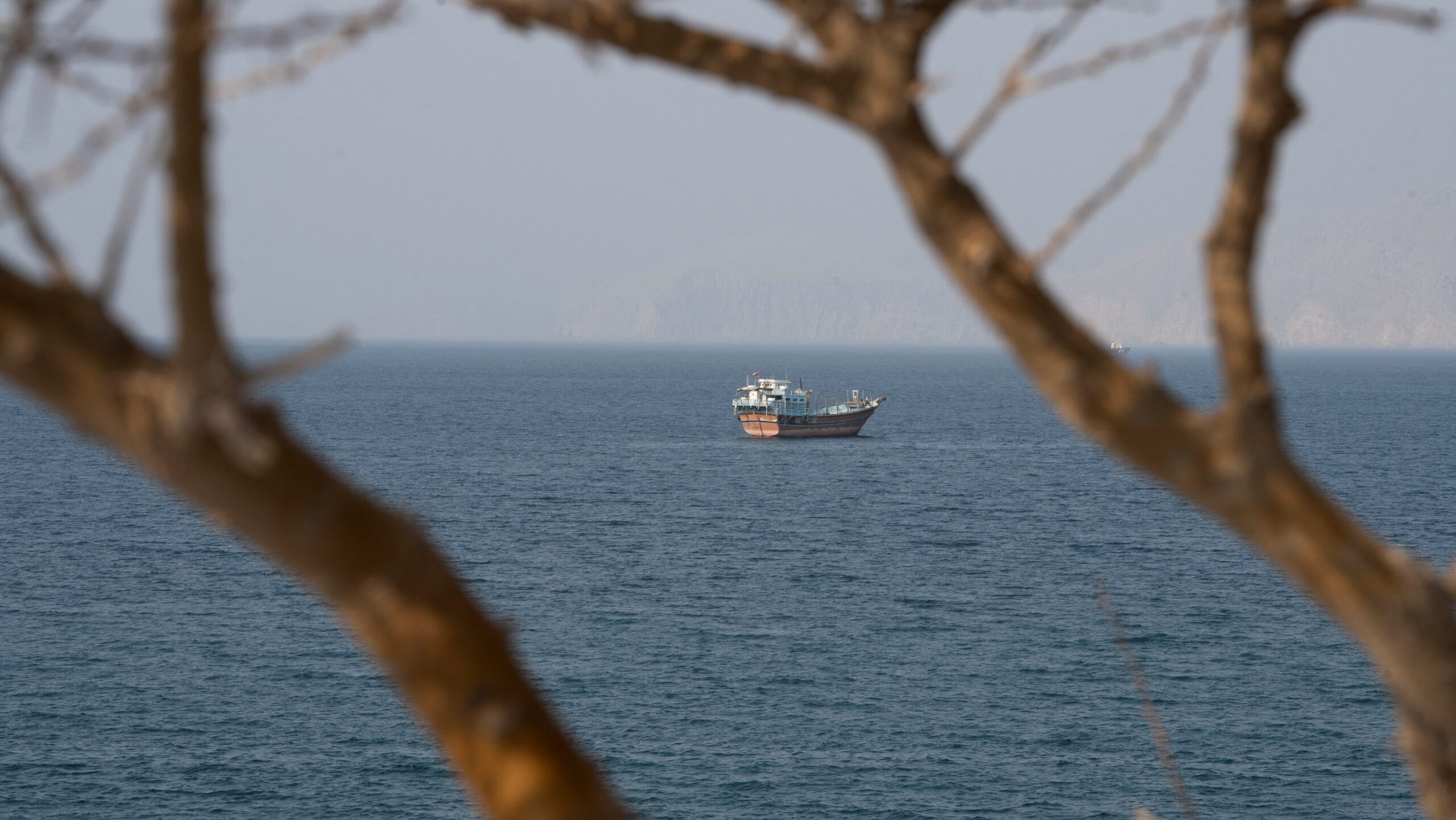
A vessel near the Strait of Hormuz, as seen from Musandam, Oman, August 17, 2026. REUTERS/
Stringer/Reuters
Today marks the day by which Iran and the United States are expected to reach a final deal under a memorandum of understanding agreed in June and aimed at ending the war
- Iran has shifted its policy from defensive to fully offensive due to stalled peace talks with the US regarding the ongoing conflict.
- The memorandum of understanding (MoU) aimed at ending hostilities has unraveled over disputes regarding control of the Strait of Hormuz, leading to resumed hostilities.
- Iran has set a deadline for the US to implement the MoU's provisions as a precondition for further negotiations, while tensions and rhetoric between both nations have escalated.
DUBAI, United Arab Emirates – Iran has decided to shift its policy from defensive to “fully offensive” due to the deadlock in efforts to agree a permanent end to its war with the United States, a senior Iranian official told Reuters on Monday, August 17.
Progress towards peace talks and a resumption of oil tanker traffic through the strategic Strait of Hormuz has ground to a halt, with no sign that the warring parties are moving towards ending the conflict that the US and Israel launched on February 28.
“Iranian entities must be prepared to escalate tensions in the Strait of Hormuz and wider region, as Iran will be ready to make decisions and take action on difficult decisions,” the Iranian official said, adding that Tehran would conduct a “timely and precise” military attack to break the US naval blockade if diplomacy failed.
Monday marked the day by which Iran and the United States were expected to reach a final deal under a memorandum of understanding agreed in June and aimed at ending the war.
Signed on June 17, the MoU set out a 60-day timeframe, extendable by mutual consent, by which Washington and Tehran should reach an agreement that would cover broader issues such as the fate of Iran’s nuclear program.
The MoU, which declared the immediate and permanent cessation of military operations on all fronts, quickly unraveled, however, due to a dispute over control of the Strait of Hormuz.
Iran to set deadline
Tehran said point 5 of the MoU gives it the right to manage the waterway, while Washington rejected that interpretation. Hostilities resumed as Tehran began firing on vessels it said were trying to sail through the waterway on an unapproved route.
US President Donald Trump said on July 7 that the pact was “over.” Tehran has repeatedly accused Washington of consistently violating its commitments.
“Within the short period of a few weeks set by Iran, all the agreement’s provisions must be implemented by the US. This is a precondition for further negotiations with the US,” the Iranian official told Reuters, adding that mediators would share Tehran’s deadline with Washington and regional states.
Both Iran and the United States have stepped up rhetoric over the past week.
Trump warned Americans in a speech at a rally on Friday, August 14, to prepare for continued high fuel prices as a result of the war, while also saying that “after we finish defeating Iran … pretty soon I’ll be declaring the Hormuz Strait a territory of the United States.”
Earlier on Monday, Trump posted on his Truth Social platform: “The number one Goal is, and always will be, that Iran cannot have, in any way, shape, or form, a Nuclear Weapon,” repeating one of his stated rationales for the war. – Rappler.com
How does this make you feel?
Loading