4 months ago
59
4 months ago
59

Upgrade to High-Speed Internet for only ₱1499/month!
Enjoy up to 100 Mbps fiber broadband, perfect for browsing, streaming, and gaming.
Visit Suniway.ph to learn
Already have Rappler+?
to listen to groundbreaking journalism.
This is AI generated summarization, which may have errors. For context, always refer to the full article.
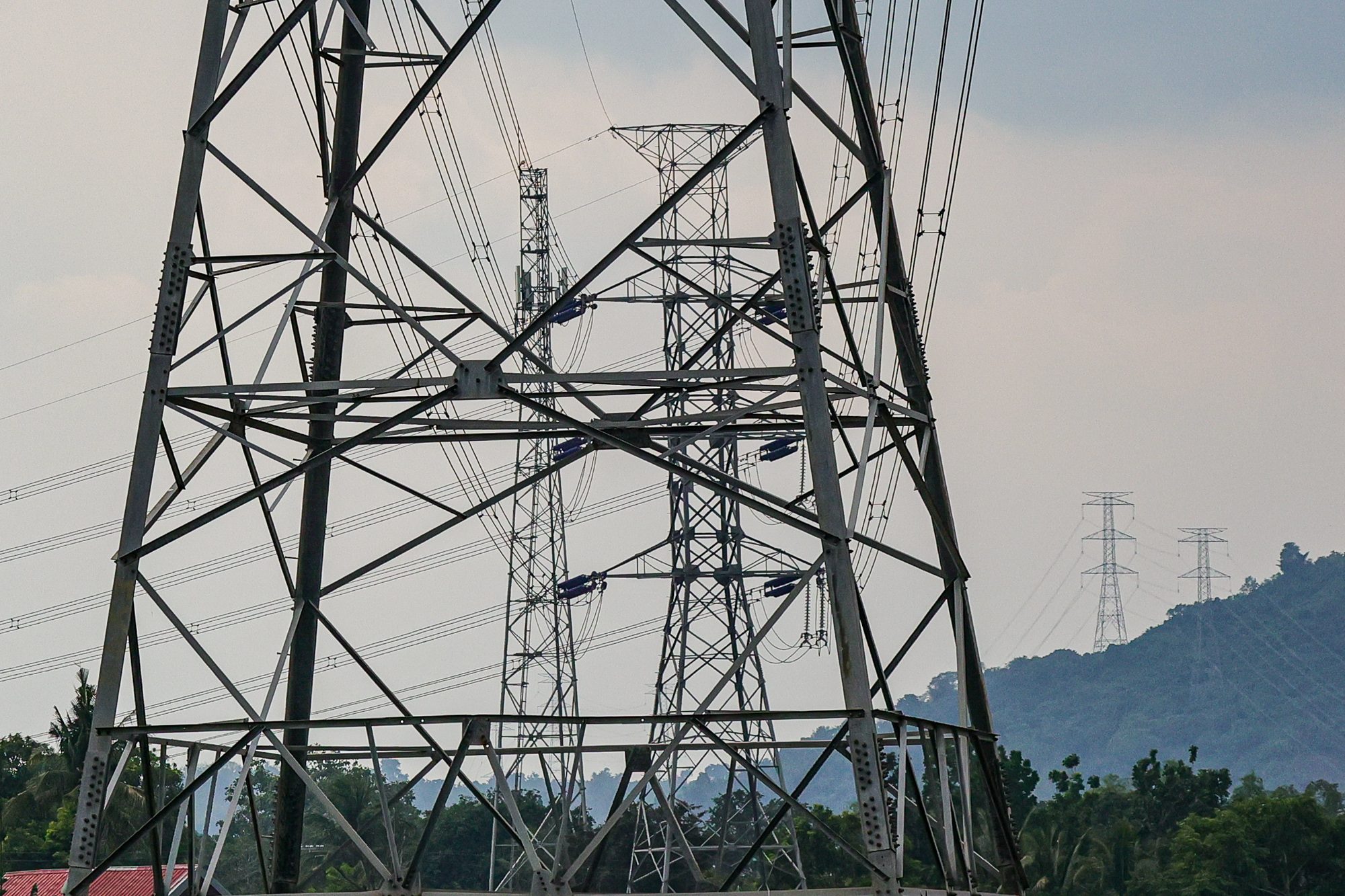
POWER TRANSMISSION. Power transmission towers and lines in Laguna and Rizal province.
Jire Carreon/Rappler
The Luzon grid's red alert is extended on Friday, May 15 after a power plant trips, further aggravating supply, says the NGCP
MANILA, Philippines – Rotating blackouts in Luzon in the Visayas highlight systemic risks in concentrating power infrastructure in few large facilities, the Institute for Climate and Sustainable Cities (ICSC) said.
In a statement on Thursday, May 14, the ICSC called out the tripping of the 500-kilovolt (kV) Dasmariñas-Ilijan transmission line and the 500-kV Tayabas-Ilijan transmission line, which caused the disconnection of around 2,500 megawatts (MW) of electricity from the grid.
The ICSC’s statement comes as the National Grid Corporation of the Philippines (NGCP) raised yellow and red alert over the Luzon and Visayas grids for a third consecutive day on Friday, May 15, as the power system struggles to meet demand.
The Luzon grid (as of 11:45 am) will be on yellow alert from 1 pm to 2 pm and from 11 pm to 12 midnight, and on extended red alert from 2 pm to 11 pm.
Meanwhile, the Visayas grid (as of 8 am) will be on yellow alert from 2 pm to 5 pm and from 9 pm to 11 pm, and red alert from 5 pm to 9 pm.
The NGCP raises the red alert status when there is not enough electricity to meet demand, while a yellow alert is issued when supply is enough but reserves are tight.
While the transmission lines were eventually brought back online, the ICSC pointed out that the disconnected power plants were unable to resume power generation immediately.
The climate and energy non-governmental organization also noted that the affected power plants – Ilijan 1 and 2 plants, as well as EERI Units 1, 2, and 3 – were shut down simultaneously due to issues involving their feedstock requirements.
“Both incidents highlight the vulnerability of an energy system heavily reliant on centralized infrastructure,” the ICSC wrote.
“This raises an important consideration: as the power system continues to rely on large centralized infrastructure — such as LNG facilities — the level of reserves or backup needed to maintain reliability may need to increase, with possible implications on electricity costs.”
To break the cycle of rotating blackouts, the ICSC called for the decentralization and diversification of power sources so that communities depend less on a few large power plants.
“Expanding the share of indigenous renewable energy — such as geothermal, hydropower, solar, and wind, backed by energy storage systems — will be central to this shift to further diversify the country’s power mix,” it said.
It also called for the adoption of technologies to create a more flexible power system that can easily respond to fluctuations in supply and demand.
“Inflexible baseload power plants will not resolve the issues we are encountering today, as they are not designed to ramp up and down quickly during these windows,” the ICSC said. – Rappler.com
How does this make you feel?
Loading