8 months ago
87
8 months ago
87

Upgrade to High-Speed Internet for only ₱1499/month!
Enjoy up to 100 Mbps fiber broadband, perfect for browsing, streaming, and gaming.
Visit Suniway.ph to learn
For most of Wednesday, January 28, the Palace — through top communications officials and the executive secretary — sought to assure the media and the public that President Marcos Jr. was fine, despite repeatedly skipping public engagements following a diverticulitis diagnosis and an overnight hospital stay.
Hours later, they’d release a video — shot by a Palace executive, no less — in an apparent attempt to dispel talk that Marcos’ condition was worse than he had let on.
“Sa ating pagkakaalam po kapag naglabas ng medical bulletin dapat serious illness. Kung sinabi ng Pangulo na hindi ito life-threatening, so, bakit kakailanganin po ngayon ang medical bulletin samantalang kami naman po ay nagpo-provide sa inyo kung ano ang kalagayan ng kalusugan ng Pangulo?” said Undersecretary Claire Castro, Palace press officer, in a briefing iwth reporters.
(As far as I know, medical bulletins are issued only in case of serious illness. If the President says this is not life-threatening, then why is there a need to issue a medical bulletin when we’re already providing you information about the President’s health?)

On January 22, the Palace disclosed to the public that Marcos spent the night in the hospital “as a precautionary measure after experiencing discomfort.” It was apparently a case of diverticulitis, or when irregular bulging pouches in the wall of the large intestine become inflamed, according to the Mayo Clinic.
The President had already returned to Malacañang and was on the mend — with rest being a crucial factor in his recovery. Although the Palace, repeatedly, explained that Marcos was working through private meetings, the lack of public events since January 22 was glaring.
At the January 28 briefing, Castro was pressed, repeatedly, if a medical bulletin would be released or one of his doctors could go on the record about the President’s condition. “Mas reliable po siguro mismo ang Pangulo ang nagsasabi kung ano po ang kaniyang nararamdaman (The President would be more reliable in telling us how he feels),” Castro said.
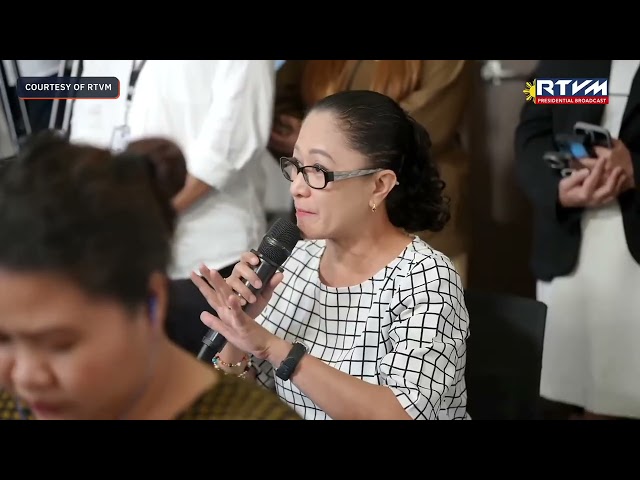
Castro also dismissed speculations about supposed medical reports regarding the President’s condition, while reiterating that a medical bulletin wasn’t necessary.
Because he’s been skipping public events since January 22, Marcos has been sending in his stead various family members and Cabinet officials to grace events. Executive Secretary Ralph Recto has stood for Marcos, particularly in events held inside the Malacañang Palace. At the kick-off for the ASEAN Tourism Forum in Cebu late January 28, it was First Lady Liza Araneta-Marcos who served as guest of honor while Tourism Secretary Christina Frasco delivered Marcos’ message on his behalf.
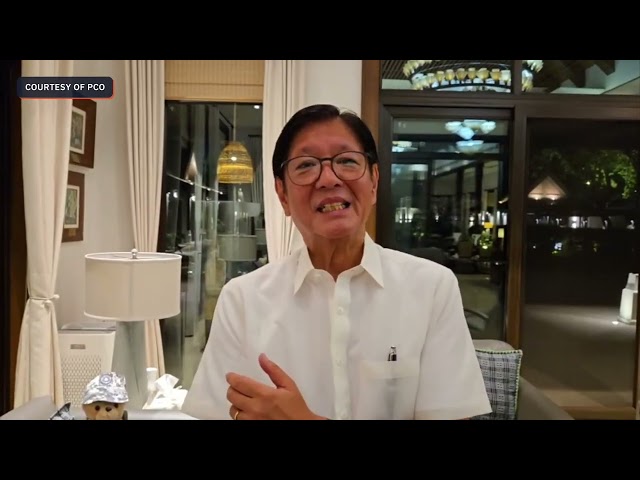
Just minutes after the program wrapped, the Palace released a video of Marcos inside what is likely his official residence, first playing with the family pet Oreo, and later explaining why he had to skip an event.
“I got the best possible medical care that you can have,” said the President, who explained doctors had visited him in Malacañang for followup checks.
“I’m back in harness,” he added.
Marcos seemed to have lost weight, although far less than how it seemed in another video released just hours prior to a police event. Responding to questions from Castro, who was taking the video, Marcos explained that he hadn’t been allowed to eat solid food since his confinement, but he was subsequently given the green light to resume his regular diet.
The Palace also later released a statement condemning the “circulation of fabricated and malicious claims regarding the President’s health, including the digital posting and sharing of an alleged medical document falsely attributed to the President.”
St Luke’s Medical Center, where Marcos had been confined a week before, also issued a statement on social media to say that any document purporting to be of Marcos’ was “fake and falsified.”
Photos of purported medical documents of Marcos have been making the rounds on social media, including one that claimed Marcos’ condition would require surgery.
“St. Luke’s Medical Center strictly upholds patient confidentiality and data privacy. Medical results are released only to the patient himself/herself through authorized and official hospital channels. Any medical results or documents obtained, posted, shared, or circulated outside these authorized channels are considered unauthorized, fraudulent, or falsified,” the hospital said in a statement.
The hospital added: “The public is strongly urged to exercise caution and responsibility in sharing unverified and unofficial information, particularly alleged medical results, as doing so may contribute to the spread of false information and may expose individuals to legal consequences.”
Two lengthy and forceful statements and a video later, one pressing question lingers: w=Why won’t Malacañang simply release a medical bulletin?
Presidents and administrations past have almost always been stingy about releasing such reports. Typically, they come out if the commander-in-chief had been confined for a long time, or if an ailment is serious. Marcos’ immediate predecessor, Rodrigo Duterte, refused for years to release any medical bulletin.
But Marcos need not look far for an example of how to obscure one’s real health condition. His father and namesake, the late dictator, infamously tried — and to a certain extent, succeeded — in hiding from the public, also suppressing information about, the true state of his health. The older Marcos had kidney issues and Lupus erythematosus.
Will the younger Marcos do as his father did? Or will he actually walk the talk and implement the transparency he supposedly champions? – Rappler.com