.png) 5 days ago
6
5 days ago
6

Upgrade to High-Speed Internet for only ₱1499/month!
Enjoy up to 100 Mbps fiber broadband, perfect for browsing, streaming, and gaming.
Visit Suniway.ph to learn
Keisha Ta-Asan - The Philippine Star
May 9, 2026 | 12:00am
Motorists refuel at a gas station along East Avenue in Quezon City on February 2, 2026.
STAR / Miguel De Guzman
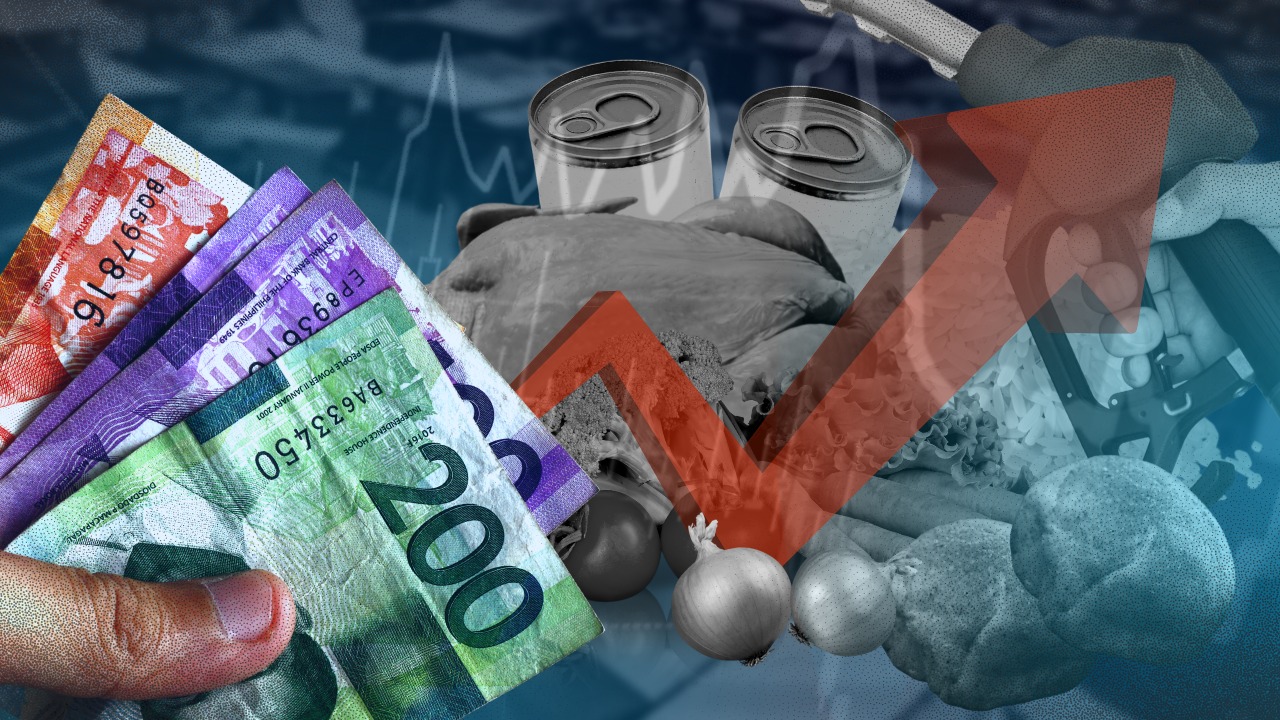
MANILA, Philippines — The Philippine economy may remain under pressure in the coming quarters as elevated oil prices, surging inflation and weak consumer and investment spending threaten to keep growth below trend while forcing policymakers to stay focused on price stability.
Economists said the slower-than-expected first-quarter gross domestic product (GDP) print signaled a more difficult growth path for the Philippines this year.
The country’s economic expansion slowed to a five-year low of 2.8 percent in the first quarter from the 5.4 percent expansion in the same period last year, data from the Philippine Statistics Authority (PSA) showed.
In a report, ING Bank regional head of research for Asia-Pacific Deepali Bhargava said first-quarter GDP was weighed down by weak consumption, contracting investment and a drag from net exports despite a modest pickup in government spending.
“It points to a much weaker-than-expected growth trajectory for 2026, increasing the downside risks to our already below-consensus GDP growth forecast of 4.5 percent,” she said.
Based on PSA data, private consumption grew by only three percent, the weakest reading since the pandemic. But government spending rose by 4.8 percent from just 0.7 percent in the previous quarter, contributing 0.8 percentage point to GDP growth.
However, ING said the overall fiscal impulse remained modest.
“Government spending will need to increase more meaningfully for second-round effects on consumption and investment to materialize,” Bhargava said.
She also noted that rising unemployment and elevated inflationary pressures would likely keep private consumption subdued as households boost precautionary savings.
Despite the weak GDP print, ING said it does not expect the Bangko Sentral ng Pilipinas (BSP) to hold back from raising rates in June as inflation control remains its priority.
Bank of America Global Research likewise said the slowdown was broad-based, with almost every major category posting weaker growth than in the fourth quarter of 2025 except government spending.
BofA maintained its 2026 GDP growth forecast at two percent and its 2027 projection at three percent, assuming that the Middle East conflict is resolved within the second half and Brent crude averages $92.50 per barrel this year.
The bank also raised its inflation and policy rate estimates, saying April’s 7.2 percent inflation showed that price pressures were spreading beyond fuel into electricity and food.
BofA now expects inflation to peak closer to 10 percent in the fourth quarter, averaging 7.3 percent this year and 5.3 percent in 2027. It also expects the BSP to raise policy rates by 25 basis points each in June and August, bringing the benchmark rate to five percent.
BPI lead economist Emilio Neri Jr. said the economy continued to lose momentum in the first quarter, partly reflecting issues related to public infrastructure. However, the weakness in construction was not limited to the public sector as private construction remained subdued.
“This largely reflects the challenges affecting the real estate industry, including the excess supply of property units. Real estate developers remain conservative in launching new projects as they navigate current conditions,” Neri said.
He said economic growth would likely stay below trend in the coming quarters, particularly in the second quarter, as elevated oil prices continue to constrain business and household spending.
“A strong monetary response to inflation may still be needed despite the weak GDP print in the first quarter as inflation momentum continues to be strong,” Neri said.