.png) 1 month ago
29
1 month ago
29

Upgrade to High-Speed Internet for only ₱1499/month!
Enjoy up to 100 Mbps fiber broadband, perfect for browsing, streaming, and gaming.
Visit Suniway.ph to learn
February 23, 2026 | 12:00am
At the start of 2026, many analysts had been bracing for the peso to drift toward the psychological 60-per-dollar level. Instead, the local currency reversed course after touching a fresh record low of 59.50 intraday in January. It has since recouped much of the slide, rising to a four-month high against the US dollar and closing at 58.157 last Friday.
The peso’s recovery has helped steady markets that were rattled earlier this year when the currency breached prior lows. It also pulled the peso back into its old trading range of 55 to 59, easing pressure on both traders and policymakers.

Stabilization and gradual recovery
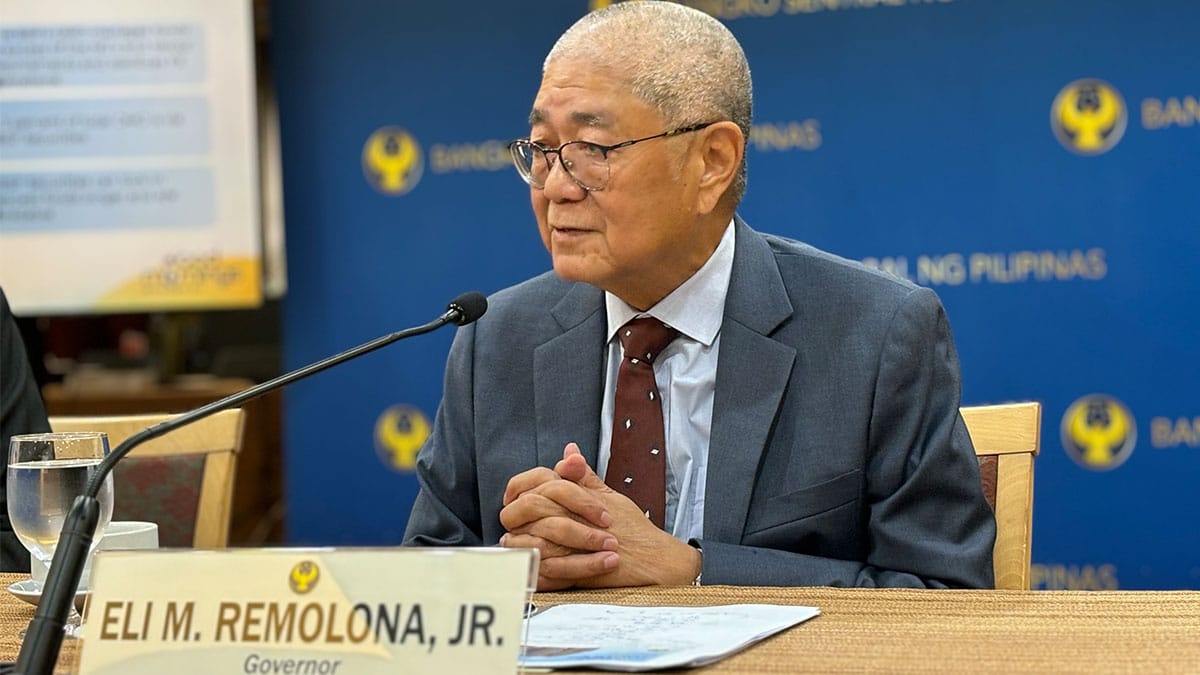
The rebound comes even as the Bangko Sentral ng Pilipinas (BSP) continues to cut rates to support growth. It reduced its benchmark by 25 basis points to 4.25 percent last Thursday, marking its sixth straight cut. The central bank also acknowledged that investor and consumer confidence have been shaken by last year’s corruption scandal. While the peso was largely unchanged last Friday, the broader trend over the past month has been one of stabilization – and gradual recovery.
Geopolitics drives flows
The peso’s rebound has been aided by a weaker dollar backdrop. The US dollar index (DXY) fell sharply in 2025 and remained soft early this year. It slid to around 95.50 in January before bouncing back to 97.80 last week.
Trump’s policies have become a capital-flow variable. Some strategists have described President Trump’s trade posture as “sleeping with enemies and fighting with friends.” His administration has antagonized allies with tariffs on Canada, Mexico, the EU, Japan and South Korea, even as it negotiates with Russia and China. As policy uncertainty rises in Washington, global money is quietly rotating back into markets outside the US — including Asia and emerging economies.
The broadening trade
The result has been a broadening out of the crowded US trades – and the markets are confirming it. The S&P 500 rose by 16.4 percent in 2025 but is up just 0.9 percent so far this year. In contrast, the iShares MSCI World ex-US ETF (ACWX) gained by 28.7 percent in 2025 and is up by 10.4 percent year-to-date. The iShares MSCI Emerging Markets ETF (EEM) surged by 30.8 percent in 2025 and added another 14.0 percent so far this year.
The Philippine stock market is starting to participate. The iShares MSCI Philippines ETF (EPHE) was roughly flat in 2025 but is up by about nine percent so far this year.

Supreme Court blocks tariffs
Last Friday added another catalyst to the broadening trade that was already underway. The US Supreme Court ruled against President Trump’s global tariffs. Emerging markets, as measured by EEM, jumped by 2.13 percent on the day, while Europe’s STOXX index gained 1.2 percent. Both indices closed at new record highs. For investors, this is another reason to broaden exposure beyond US assets. The continuing clashes between Trump’s policies and US institutions is creating a persistent dilemma that markets are struggling to price.
Iran watch
For the peso, the next risk is that geopolitics interrupts the dollar’s downtrend. President Trump said he is considering a military strike on Iran, as Washington ramps up a massive deployment in the region and presses Tehran over its nuclear program.
The dollar is still the world’s reserve currency, backed by the deepest capital markets and unmatched military power. If a US strike materializes, we could see a familiar pattern: risk aversion spikes, the dollar catches a bid and emerging-market currencies pull back – even those that have been stabilizing.
Philequity Management is the fund manager of the leading mutual funds in the Philippines. Visit www.philequity.net to learn more about Philequity’s managed funds or to view previous articles. For inquiries or to send feedback, please call (02) 8250-8700 or email [email protected].