.png) 2 days ago
4
2 days ago
4

Upgrade to High-Speed Internet for only ₱1499/month!
Enjoy up to 100 Mbps fiber broadband, perfect for browsing, streaming, and gaming.
Visit Suniway.ph to learn
Amid stagflation concerns
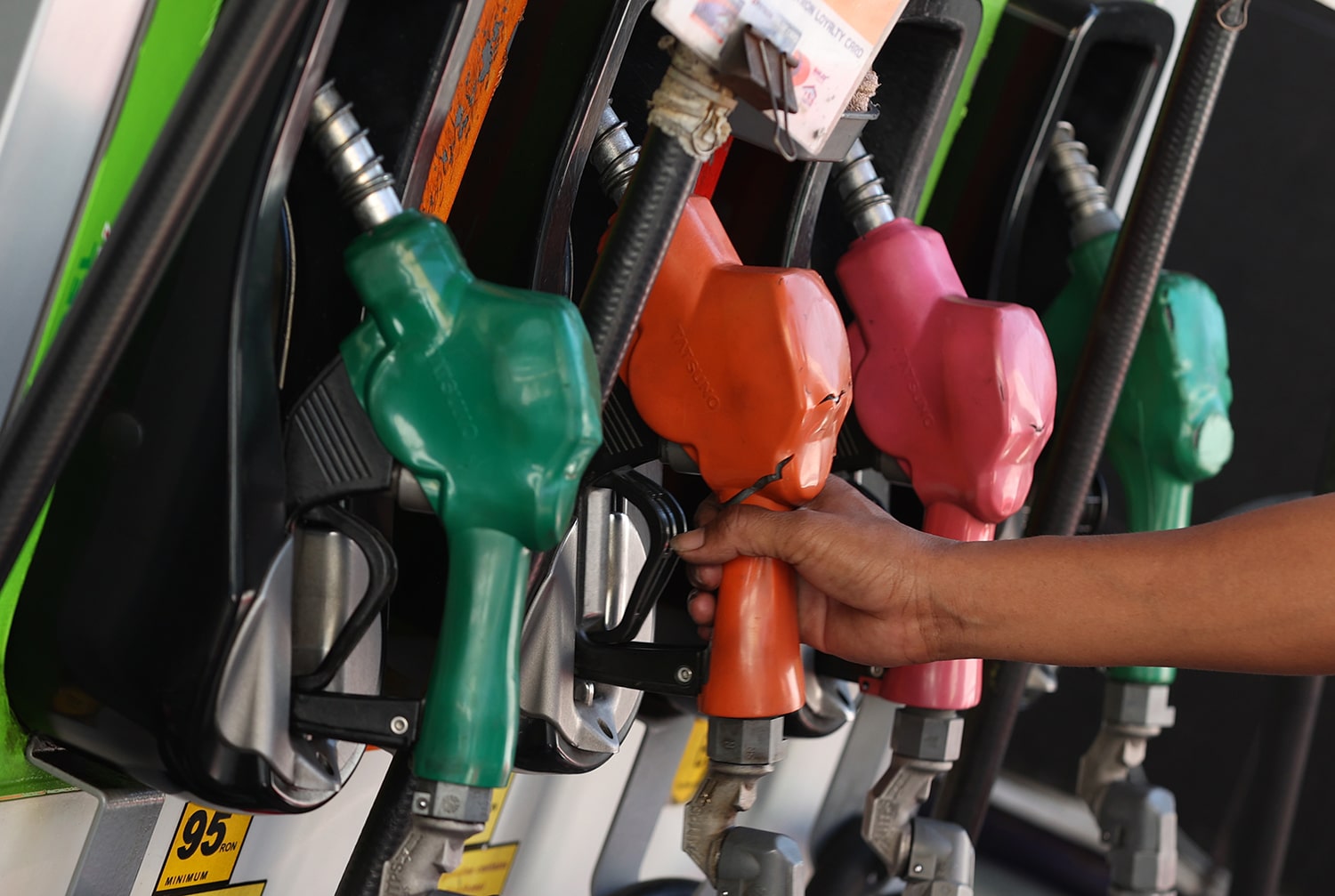
MANILA, Philippines — President Marcos is optimistic that the Philippine economy will perform better in the second quarter, but is wary about a possible stagflation – slow growth accompanied by rising inflation – as oil prices remain volatile because of the Middle East conflict.
In an interview with Japanese media outfits last Monday, Marcos admitted that Philippine economic expansion was “lackluster” in the previous quarter, but he stressed that state spending has been accelerated to promote growth while assisting the needy sectors.
“Public spending is what will keep the economy rolling, and that will continue to support GDP (gross domestic product) growth,” the President said.
“We expect to improve this quarter and certainly in the next half of this year,” Marcos added.
The Philippines’ GDP grew by a lower-than-expected 2.8 percent in the first quarter as the economy took a hit from weaker investor confidence caused by the flood control scandal and higher oil prices triggered by the Middle East crisis.
The expansion was slower than the 5.4 percent growth recorded in the same period last year and the three percent expansion posted in the last quarter of 2025. The growth in the first three months was also lower than the government’s five to six percent target range for this year.
Marcos admitted that the delay in public spending at the beginning of the year did not help the economy, especially after the start of the war in the Middle East.
“But now we are increasing, accelerating public spending. And our spending has been directed more toward direct spending to ordinary citizens,” the President said.
“That way, the assistance is being fulfilled. Structural changes, by their nature, take time to be felt by people. And people need assistance now. We cannot allow people to go hungry because they are waiting for the new policies of the government to come down and be felt,” he said.
He noted that the administration has provided subsidies and fuel discounts to sectors affected by the oil price shocks and has reduced its operational expenses to ease the impact of the Middle East crisis.
Although he is bullish about the economy, Marcos said stagflation remains a concern so the Philippines is talking to other countries to ensure adequate oil supply while keeping food prices low.
“As to the economy, the concern that we have is the concern about stagflation, which is when the GDP growth is stagnant but inflation continues to increase. And so this is what we have been trying to control,” he said.
“Food prices are something that we can do something about. And that is why we have already instituted several new directives to make sure that the price of basic food stays at an affordable level.”
Marcos said the government has been able to keep basic food commodities “down to the same price,” citing his decision to put a price cap on imported rice at P50 per kilo.
“But it’s come to the point where the producers... have asked for permission to raise the prices of the non-critical food items. So we cannot deny them that this is the fact, that they have to adjust to the new reality that we’re all facing,” he added.
Meanwhile, the think tank of the House of Representatives believes that Philippine economic growth is unlikely to reach four percent this year with soft consumption and sluggish investments likely to persist.
“Exigent circumstances invalidate macroeconomic assumptions made prior to the energy crisis. It is highly unlikely that the Philippines will reach four percent growth, let alone five percent growth in 2026,” the Congressional Policy and Budget Research Department (CPBRD) said in a discussion paper on the initial impact of the 2026 oil crisis on the country’s economic growth.
However, Department of Economy, Planning and Development Secretary Arsenio Balisacan said this year’s five to six percent growth target would be lowered, following the first quarter growth outturn.
For the second quarter, CPBRD said that second quarter GDP growth is expected to settle around the median and mean estimates of 2.5 to three percent.
However, it said the second quarter growth forecast could be at a slower 1.5 to 2.5 percent, assuming a full quarter of severely elevated prices of fuel, fertilizer and other key commodities.
“Household consumption, which was on the decline prior to the onset of the latest Middle East conflict, is poised to further decline. Similarly, anemic investment growth is expected to persist, or worsen, with growing economic uncertainty and rising costs of borrowing,” CPBRD said.