.png) 6 days ago
12
6 days ago
12

Upgrade to High-Speed Internet for only ₱1499/month!
Enjoy up to 100 Mbps fiber broadband, perfect for browsing, streaming, and gaming.
Visit Suniway.ph to learn
It’s the same old sob story – Filipino rice farmers receiving very low prices for their palay despite the high cost of production on one end and rice consumers paying high retail prices for this staple on the other.
Latest data from the Philippine Statistics Authority revealed that in 2015, the average cost of palay production in the Philippines is estimated at P13.26 per kilo. On a per hectare basis, the average cost to produce palay at the national level was P55,097 last year.
In Vietnam, palay production cost is around P6.5 per kilo while in Thailand, it is P8.9 per kilo.
The reasons are simple.
Labor cost is high in the Philippines. Farm sizes are small and fragmented, a disincentive to mechanization. Many of our inputs such as fertilizers, pesticides, vaccines, feed grains and machinery are also indirectly imported.
Average yields are also significantly lower compared to Vietnam and Thailand.
According to the PSA, the yield per hectare of palay in the first quarter was at 4.07 metric tons, or 0.7 percent lower than the 4.09 MT per hectare recorded in the same quarter of last year.
As a result, the first quarter palay production dropped to 4.4 million MT or 6.3 percent less than the 4.7 million MT registered during the same period last year. The first quarter 2026 production was the lowest recorded for the same quarter since 2020.
Vietnam’s average palay yield meanwhile is around six MT per hectare with seasonal variations ranging from 5.3 million to 6.9 million MT depending on the crop cycle.
Rice farming in Vietnam is highly mechanized, boosting field productivity and reducing post-harvest losses. They also consistently use improved high-yielding seed varieties and optimized fertilizers.
As one of the world’s largest rice producers contributing about five percent of global rice output, Vietnam produces over 40 million to 43 million MT of palay annually while exporting over eight million MT of rice.
Meanwhile, Thailand, also one of the world’s largest rice exporters, produces around 30 million MT of palay across over 10 million hectares. It is targeting to export about seven million MT of rice this year.
Palay is harvested in the Philippines across a measly 1.04 million hectares while Vietnam has around four million hectares – planted two to three times per year due to extensive, active irrigation networks covering close to 90 percent of the farms.
And because Vietnam and Thailand produce rice at much lower cost, they are able to export rice, even after shipping costs and import tariffs, at prices lower than locally produced ones.
The Philippines has become the world’s largest rice importer. In 2024, rice imports by the Philippines reached 4.8 million MT. Rice demand has consistently exceeded production. Last year, total demand reached 13.8 million MT while production stagnated at 12.4 million MT, or a deficit of 1.4 million MT. However, rice imports even exceeded the gap, reaching 4.7 million MT in 2025.
Our country’s rice self-sufficiency ratio has fallen miserably from 116 percent in 1960 to 91 percent in 2025.
This year is not going to get any better. According to reports, a looming super El Niño this year threatens to reduce rice yields by as much as 30 percent, possibly cutting palay output to 17 million to 18 million MT and forcing rice imports to rise to six million MT.
Despite low palay prices, locally produced rice remains expensive for Filipinos. Traders buy palay from farmers at low prices, have them milled and then sell rice at much higher prices, pocketing most of the difference.
The National Food Authority (NFA) could have served as the equalizer, buying palay from farmers at higher prices and selling rice at lower prices.
However, the Rice Tariffication Law (RTL) under Republic Act 11203 significantly reduced NFA’s role to buffer stocking for emergencies, removing its proactive influence on market price and supply stabilization. The RTL also opened the market to rice imports and imposed tariffs instead of quantitative import restrictions.
According to a House bill filed last year that sought to strengthen NFA’s regulatory powers, with fewer guaranteed buyers, many rice farmers were left at the mercy of traders who often dictated prices well below production costs, thereby discouraging local production and threatening livelihoods.
Filipino rice farmers, meanwhile, are consistently recorded among the poorest basic sectors in the country, with a poverty incidence as high as 30 percent.
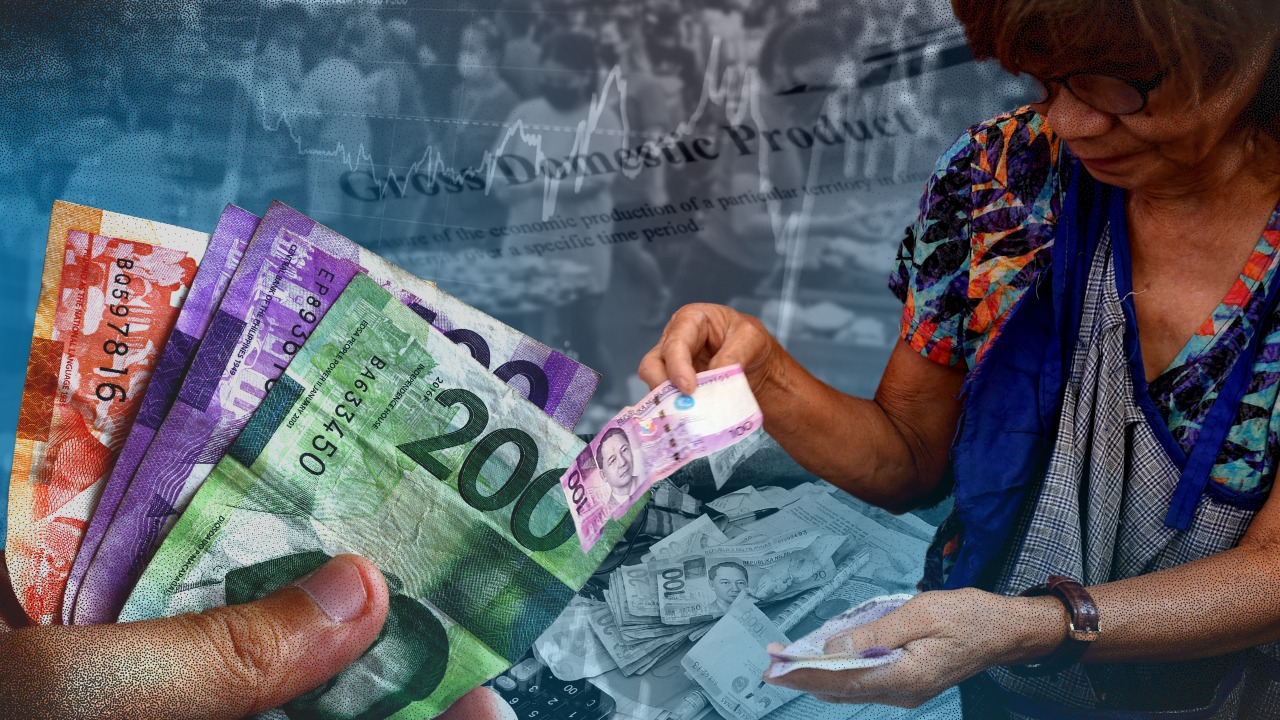
A paper by IBON Foundation noted that Philippine agriculture has fallen to its lowest share of gross domestic product in history. Agricultural land area has sharply declined to just 6.2 million hectares in 2022 from 9.97 million hectares in 1991 due to massive land use conversions starting in the 1990s. Agricultural trade deficit ballooned to $11.12 billion in 2025 from just $42 million in 1994. Philippine rice self-sufficiency declined while countries such as Thailand, Vietnam, Cambodia and Myanmar achieved more than 100 percent self-sufficiency.
The state of our country’s rice industry mirrors that of the entire agricultural sector. As pointed out by IBON, Filipino farmers are trapped in a cycle of poverty and hunger while ordinary Filipinos bear the burden of high prices for basic food. This situation is not going to change until our government places agriculture high up on its priorities.
For comments, email at [email protected]