.png) 1 month ago
29
1 month ago
29

Upgrade to High-Speed Internet for only ₱1499/month!
Enjoy up to 100 Mbps fiber broadband, perfect for browsing, streaming, and gaming.
Visit Suniway.ph to learn
Richmond Mercurio - The Philippine Star
February 14, 2026 | 12:00am
The Philippine Stock Exchange is located at Bonifacio Global City in Taguig, Metro Manila.
BusinessWorld / file
MANILA, Philippines — The local stock market tumbled for a second straight session amid negative cues from Wall Street.
The benchmark Philippine Stock Exchange index fell sharply by 1.34 percent or 86.67 points to finish yesterday’s session at 6,384.58.
The broader All Shares index likewise declined by 0.94 percent or 33.96 points, settling at 3,560.26.
“Philippine equities tracked Wall Street meltdown as fears about an AI-fueled disruption could slash demand for goods and services of key industries in the US,” AP Securities Inc. said.
All sectoral gauges were in the red, with mining and oil and services indexes taking the biggest hit, plunging by 3.34 percent and 3.01 percent, respectively.
Trading was quite active as total turnover value improved to P8.37 billion from the previous day’s P6.89 billion.
Market breadth was negative with decliners battering advancers, 115 to 74, while 82 issues were unchanged.
Remaining as the session’s top traded stock was ICTSI, which plummeted by 4.50 percent to P658 per share, followed by BDO and Jollibee which shed 2.51 percent and 0.10 percent, respectively, to P136 and P207.80.
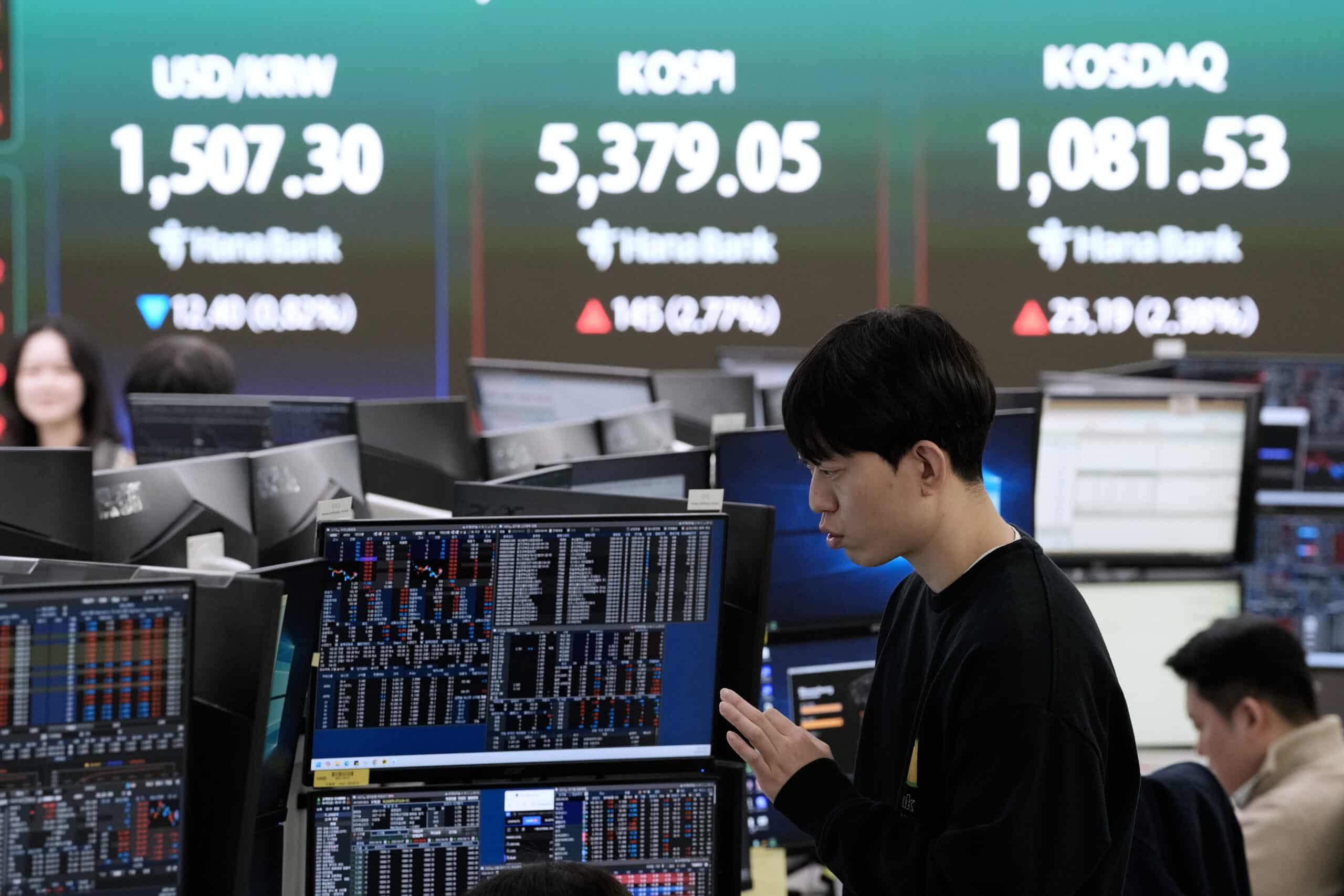
Meanwhile, other markets in Asia retreated from record highs yesterday, as worries about shrinking margins in the tech sector hit the likes of Apple, driving investors into safe-haven bonds ahead of key US inflation data.
On Wall Street, the technology-heavy Nasdaq Composite tumbled by two percent after Cisco Systems posted quarterly adjusted gross margin below estimates as costs of memory chips surged. That drove its shares down 12 percent and wiped out about $40 billion of its market cap.