.png) 8 months ago
125
8 months ago
125

Upgrade to High-Speed Internet for only ₱1499/month!
Enjoy up to 100 Mbps fiber broadband, perfect for browsing, streaming, and gaming.
Visit Suniway.ph to learn
Marco Luis Beech - The Philippine Star
December 2, 2025 | 12:00am
Special Report
MANILA, Philippines — Reforms have made the Philippine budget process more transparent on the executive side, yet the corruption label persists, as the ongoing flood control scandal continues to challenge the administration’s claims of transparency in budget crafting.
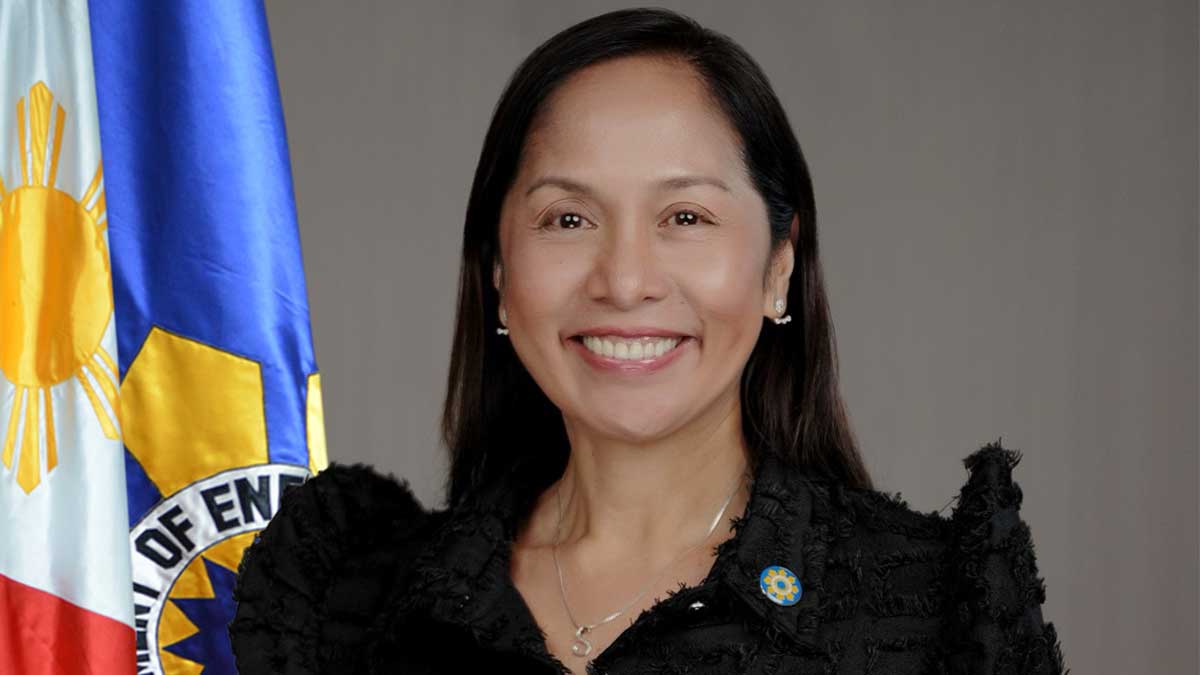
Former secretary of the Department of Budget and Management Amenah Pangandaman said that the budget process became more transparent and inclusive than before during her term, noting that the DBM has proactively published budget data in easily accessible formats.
“We pushed for procurement modernization. We strengthened the green public procurement program. We institutionalized the use of artificial intelligence and digital tools in various stages of the budget cycle,” she told The STAR.
For the budget to be approved, it is first prepared by the executive branch through the budget department and then submitted to Congress, which holds the constitutional power of the purse.
“Back then, budget documents were often available only upon request, and mostly in highly technical formats. Today, budget information is published on time, in plain language, visual formats and across digital platforms that reach millions,” she said.
According to the DBM’s Budget 101 document, preparation for the budget begins in December of the previous fiscal year with the issuance of the budget call, followed by program convergence with line departments between January and February of the current year.
From March to April, the department releases the Budget Priorities Framework and conducts second-round hearings to review proposed budget submissions for the next fiscal year.
Between June and July, the DBM consolidates the proposed national budget, secures the president’s approval and submits it to Congress for deliberation and eventual passage.
The Constitution specifically mandates the President to submit to Congress, within 30 days of the opening of each regular session, the basis for the General Appropriations Bill. This is the National Expenditure Program (NEP), also known as the President’s Budget.
At that point, the ball is in the hands of the Senate and the House of Representatives for crafting next year’s budget.
Congressional insertions
Almost all senators in the previous Congress inserted a total of at least P100 billion worth of projects under the 2025 national budget, according to Senate Blue Ribbon committee chairman Panfilo Lacson.
Once the budget reaches Congress, the House of Representatives first deliberates on its version, which is then sent to the Senate.
Senators subsequently craft their own version of the bill.
When the two chambers’ versions and priorities differ, a bicameral conference committee is convened to reconcile and consolidate the differences. However, unlike budget hearings, the committee’s proceedings are not open to public viewing.
Lacson stated that there will be no insertions in the upcoming bicameral conference committee for the 2026 budget.
Pangandaman previously denied any involvement by the executive branch in congressional budget insertions for the 2025 budget, responding to allegations made by resigned Ako-Bicol party-list representative Elizaldy Co.
She noted that the executive has no hand in the passage of the budget once the NEP is transferred to Congress. DBM Undersecretary Goddes Hope Libiran previously told The STAR that their role is limited to preparing the budget.
By August this year, the former budget secretary had warned that it would be preferable to delay the passage of the 2026 budget for proper scrutiny rather than reenact the 2025 budget, which Pangandaman had noted was widely criticized as the most corrupt.
As previously reported, Congressional insertion reached over P140 billion in the current fiscal year’s budget. And news reports noted that it was mostly for infrastructure allocations introduced during the bicameral conference committee in late 2024.
How efficient is the current budget?
Rizal Commercial Banking Corp. chief economist Michael Ricafort said that the national budget should not be weaponized to get votes, as it adds to the budget deficit if there are leakages or those not eligible continue to get subsidies from the government.
“Recent political noise and alleged corruption issues could weigh on both economic growth, investments and other forms of assistance for the country. There is no other way but to further improve governance standards to better align with global best practices,” he said.
Ateneo School of Government reported that padrino-based poverty reduction in government subsidies through “ayuda” breeds being treated as favors owed rather than as citizens’ rights.
“In 2025, the 4Ps budget was reduced by P50 billion, part of the P94 billion taken from the DSWD budget. PhilHealth’s subsidy of P74.4 billion was reduced to zero. In their place, generous funding was provided to cash dole-outs like the Abot-Kamay ang Pagtulong (AKAP) program, the Assistance to Individuals in Crisis Situations (AICS), the Medical Assistance for Indigent Patients Program (MAIFP), and the Tulong Panghanapbuhay sa Ating Disadvantaged/Displaced Workers (TUPAD) program,” the report read.
For senior research fellow at the Philippine Institute for Development Studies, John Paolo Rivera, the budget must balance immediate aid with long-term investments in infrastructure, agriculture and human capital.
He noted that the budget process is more transparent today, but efficiency remains uneven.
“Procurement delays, weak project preparation and inconsistent implementation still slow spending and recent corruption issues show that oversight and enforcement need strengthening,” he said.
Pangandaman said that the budget process became more transparent and predictable, noting the institutional reforms that were recognized on the global stage.
“We institutionalized mechanisms for civil society engagement. We welcomed the media into the process, not just during briefings, but as regular partners in transparency,” she said.
“All these reforms built a budget process that is more dependable, more open, and more aligned with global standards of good governance,” Pangandaman added.