2 months ago
42
2 months ago
42

Upgrade to High-Speed Internet for only ₱1499/month!
Enjoy up to 100 Mbps fiber broadband, perfect for browsing, streaming, and gaming.
Visit Suniway.ph to learn
From banning a video game to lowering the age of criminal responsibility in the Philippines, various proposals have sought to address the shooting incident that killed three children and injured 20 others in Tacloban City.
The Tacloban shooting incident, which involved two children in conflict with the law (CICL) aged 14 and 15, has sent this Christian-majority nation into soul-searching mode.
Many policymakers and concerned citizens have failed to realize, however, that youth violence cannot be attributed to any single factor.
It is not just the video game GoreBox. It is not just the extremist network 764. It is not just the age of criminal responsibility, which is currently set at 15.
Liane Alampay, a psychology professor at Ateneo de Manila University, said in a recent Senate hearing that violent behavior among young people stems from multiple reasons. “We often say that the root causes of why young people turn to violence are systemic,” Alampay said. “Online games are only one of the reasons.”
“Risk factors” for children can come from their personalities, families, schools, communities, and the internet, said Alampay, who is also a consultant of the Department of Social Welfare and Development.
If children are exposed to violence in the family, Alampay said, they are more likely to “grow aggressive and violent.” In schools, “a history of bullying and victimization” is also “predictive of violent behaviors.” The same situation plays out in the online setting, where children encounter “models of violence” and “communities that glorify violence for its own sake.”
“There is a pathway to violence,” Alampay said.
Duterte’s path
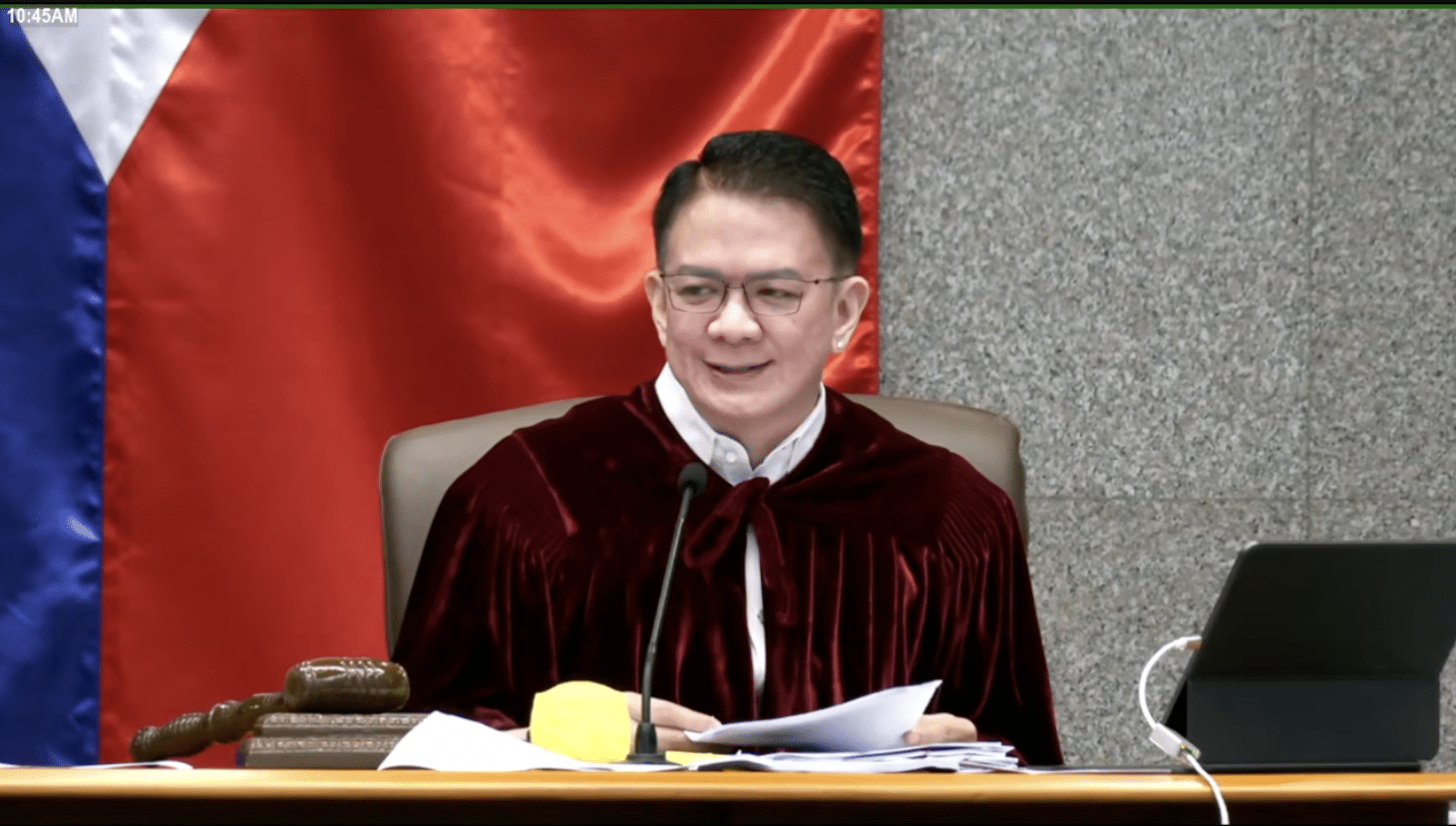
I remembered the Tacloban shooting incident as I watched the first three days of Vice President Sara Duterte’s impeachment trial at the Senate, where a “pathway to violence” was likewise on full display.
The trial began with a discussion of Article IV of the Articles of Impeachment against Duterte.
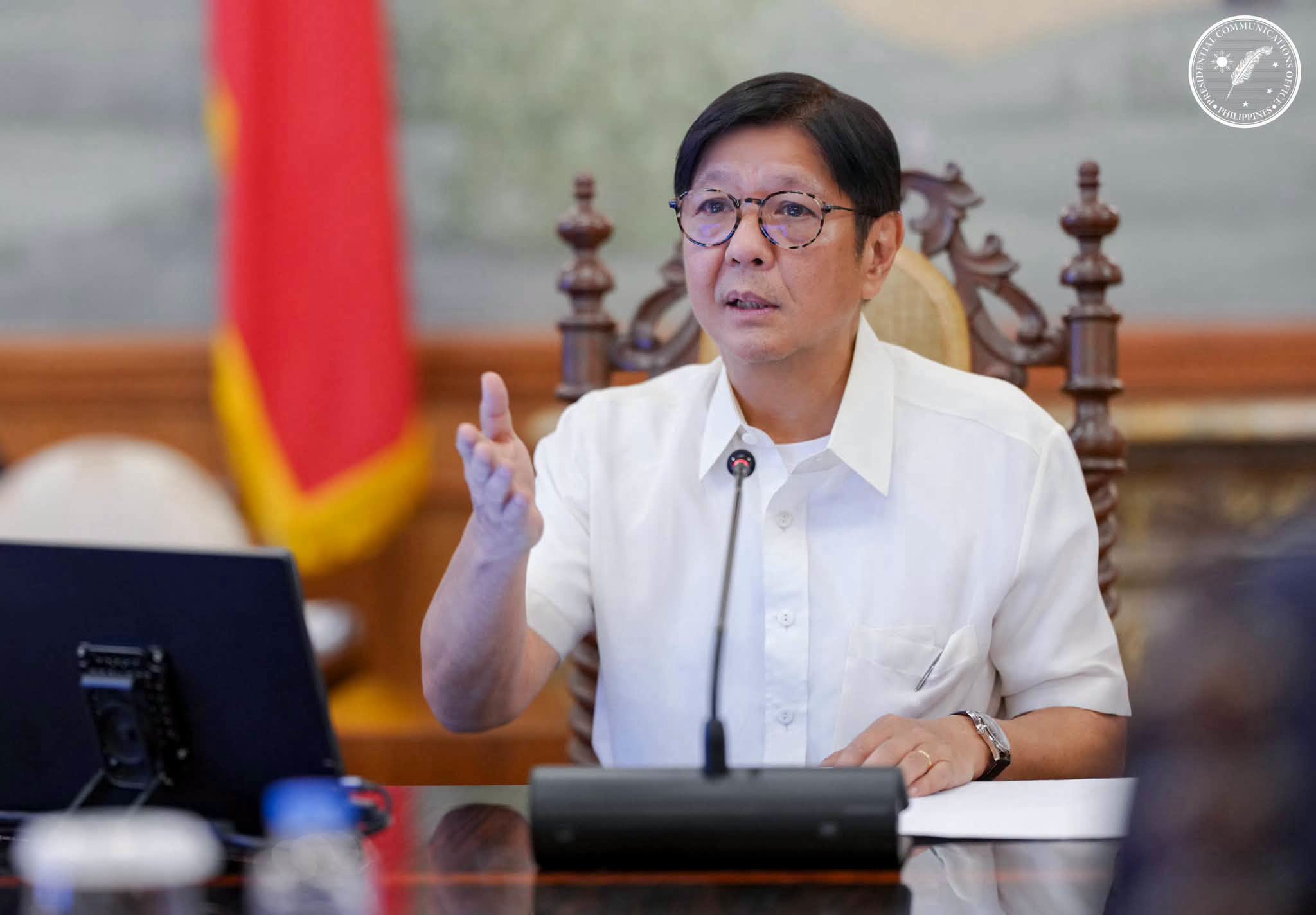
Article IV involves the allegation that Duterte plotted to kill President Ferdinand Marcos Jr. or BBM, First Lady Liza Araneta-Marcos, and Representative Ferdinand Martin Romualdez, who is the President’s cousin.
This impeachment article alleges that by doing this, the 48-year-old Duterte violated the Constitution, committed high crimes, and betrayed the public trust.
The basis of the allegation is an online media briefing on November 23, 2024, where Duterte said in the vernacular: “I talked to someone. I told the person, if I get killed, kill BBM, Liza Araneta, and Martin Romualdez. No joke, no joke.”
There has been much debate about whether Duterte indeed contracted an assassin or was merely using a figure of speech.
“There is no proof of any contracting of an assassin,” defense lawyer Mark Vinluan said on Wednesday, July 8. “Trying to prove this stretched narrative using a hodgepodge of materials is a waste of this honorable court’s time and the Filipino people’s money.”
Vinluan proceeded to defend Duterte’s words. He said Duterte was answering a question about Oplan Romanov, “which is the plot to eliminate VP Sara and her entire family.”
“The truth of the matter is this: She and her family were threatened, and while her response was unconventional, it was justified,” Vinluan said.
“When VP Sara uttered those words, she was not responding as Sara Duterte, the vice president, but Sara Duterte the wife, mother, daughter, and sister, who only sought to protect her own and her family members’ lives,” he added.
Vinluan said Duterte did not commit an impeachable offense but “drew the line in the sand and said, ‘Enough is enough.’”
Fitness for the job
No, Counsel, this is enough.
Assuming, for the sake of argument, that there is no proof that Duterte contracted an assassin, how can we justify making death threats and cursing at enemies like an Armalite in an online press conference?
On one level, it is conduct unbecoming of a Vice President.
Article XI, Section 1 of the Philippine Constitution states: “Public office is a public trust. Public officers and employees must, at all times, be accountable to the people, serve them with utmost responsibility, integrity, loyalty, and efficiency, act with patriotism and justice, and lead modest lives.”
Is threatening to kill any person a display of integrity?
I agree with Rappler managing editor Miriam Grace Go, who spoke in a panel discussion on the third day of Duterte’s impeachment trial. Citing the prosecution, Go said that when Duterte had a “meltdown” on video, it made people question her “fitness for the vice presidency.”
“If you have those kinds of thoughts, they should remain private, perhaps discussed at your dinner table at home. But for you to go on video and say something like that?” said Go, who has covered politicians for decades.
Yet on another level, the Vice President’s meltdown can lead to even greater problems, if unchecked.
Violence, after all, is formed in a culture — which, in turn, is shaped by power.
A moral argument
Duterte’s threats against Marcos illustrate the culture of violence from which we want to insulate our children.
The Constitution, in Article II, Section 13, is clear about this matter of policy: “The State recognizes the vital role of the youth in nation-building and shall promote and protect their physical, moral, spiritual, intellectual, and social well-being. It shall inculcate in the youth patriotism and nationalism, and encourage their involvement in public and civic affairs.”
Morality lies at the heart of the Constitution, drafted after 14 years of the corrupt Marcos dictatorship.
Former chief justice Maria Lourdes Sereno, a born-again Christian, explained in a speech on March 6 that “as a political instrument, the Constitution is also providing us moral grounding.”
“For example, in Article II, Section 13, the Constitution is basically saying: Philippine State, Philippine Republic, don’t ever look at the Filipino as a material being alone. Look at him as a moral and spiritual being,” Sereno said.
“So our government is not to be amoral,” the former chief justice said. “It is to make a choice in favor of morality, in favor of the development of ethical values.”
Yet contrary to the Constitution’s mandate, Duterte’s threats do not “promote and protect” morality. Rather, they corrode the moral and spiritual fiber of the youth who watch her meltdown, modeling her behavior as the nation’s most powerful woman.
Duterte’s threats not only target the President, but drag Filipino children onto a treacherous pathway to violence. – Rappler.com
Paterno R. Esmaquel II is a journalist specializing in religion and public life. A former Rappler reporter and news editor, he now writes for international Catholic news outlets, teaches journalism at the University of Santo Tomas, and runs a YouTube channel called The Religion Reporter.