 4 months ago
57
4 months ago
57

Upgrade to High-Speed Internet for only ₱1499/month!
Enjoy up to 100 Mbps fiber broadband, perfect for browsing, streaming, and gaming.
Visit Suniway.ph to learn
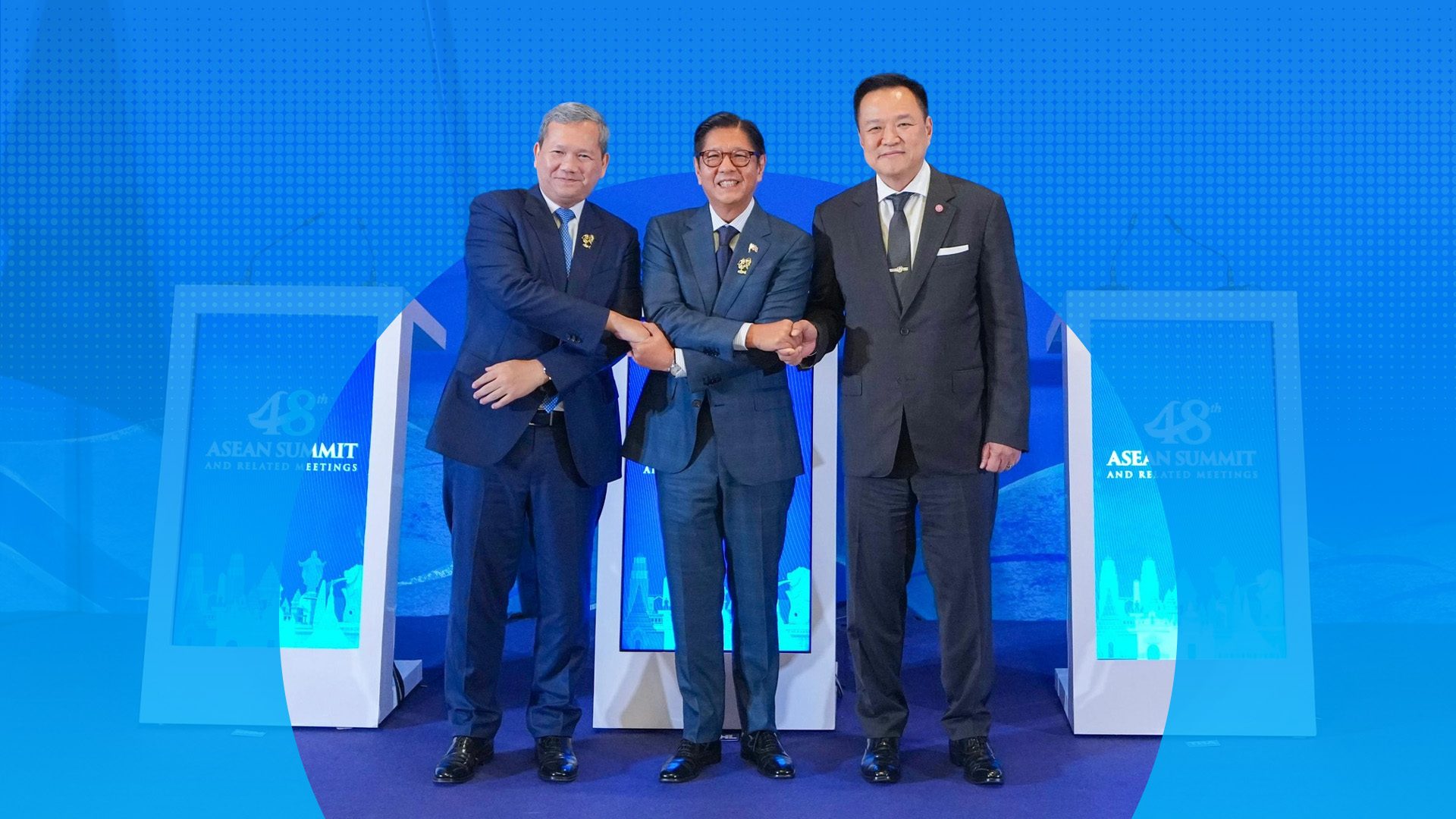
HANDSHAKE. ASEAN chair and Philippine President Ferdinand Marcos Jr. shake hands with Cambodian Prime Minister Hun Manet and Thai Prime Minister Anutin Charnvirakul after a trilateral meeting on the sidelines of the 48th ASEAN Summit in Cebu, on May 7, 2026.
Graphic by Marian Hukom/graphic from Presidential Communications Office
Sustained de-escalation of conflict in Southeast Asia is generally incremental, face-saving, and intentionally quiet
In an era where coercive diplomacy and geopolitical grandstanding are being used at an ever-increasing rate, the recent Cambodia-Thailand-Philippines trilateral in Cebu delivered something infinitely rarer: a quiet but credible effort at regional peacebuilding through the very mechanisms of the ASEAN.
This column explores how President Ferdinand “Bongbong” Marcos Jr., eschewing triumphalism, was able to put the Philippines forward as a significant diplomatic convenor capable of opening dialogue between two deeply distrustful neighbors.
The biggest diplomatic victories tend to be those that feel modest in real time. There are no triumphal pronouncements, no grand peace accords made for domestic political theater, and no sweeping promises that history has suddenly changed direction. There are just the adversaries looking at one another across the table long enough to see that their ongoing war has become more expensive than any compromise.
That could certainly be one way to describe the significance of the recent Cambodia-Thailand-Philippines trilateral gathering in Cebu.
Compared to the previously announced Kuala Lumpur ceasefire arrangement negotiated in the shadow of US President Donald Trump’s intercession, the summit initially appeared understated. Trump openly tied the earlier agreement to reciprocal trade negotiations and tariff relief, with Thailand, Cambodia, and Malaysia ultimately winning lower US tariffs after the signing of the ceasefire framework.
The problem with externally accelerated diplomacy, though, is that agreements made under immediate economic pressure can help solidify headlines more rapidly than they can erase fissures of mistrust between the signatories. Within weeks, the accord in Kuala Lumpur unraveled. Under public displays of reconciliation were revealed the deeper tensions between Thailand and Cambodia.
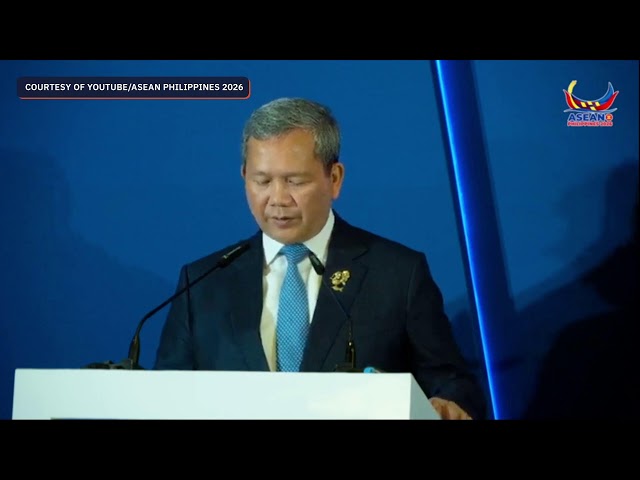
Nobel Peace Prize?
The gathering in Cebu felt different. It was not because the territorial dispute suddenly went away. Troops remain deployed. Border sensitivities persist. Nationalist politics still fluctuate on both sides. Yet the Cebu trilateral embodies something that the Association of Southeast Asian Nations (ASEAN) historically understands better than many Western diplomatic mechanisms: sustained de-escalation in Southeast Asia is generally incremental, face-saving, and intentionally quiet.
Most of my CEO friends — who list their office addresses in the Binondo financial district and participated in the conference — feel that Marcos deserves a Nobel Peace Prize nomination. The President was not a transformative peacemaker worthy of being canonized right away, as his supporters understandably wish, catapulting him to mythological stature for every diplomatic success. But a Binondo executive says that the speculative claim circulating among some political and business circles that there could be a Nobel Peace Prize for him on the horizon is not far-fetched. “Our President is not demanding it, [in] contrast to US President Donald Trump,” he says.
This chatter about a “future Nobel nomination” being tracked by some regional analysts and business representatives could be premature. What matters now politically is that the Philippines is being considered to be more than just a geopolitical bystander within that block, but also as a credible diplomatic convenor able to carve out political space for rivals to negotiate without humiliation.
Peace without coercion
That distinction matters a lot in Asia. Western diplomacy, in its most frequent version, involves pressure, deadlines, and public confrontation. The culture of the ASEAN operates differently.
In emotional territorial disputes involving diverse neighboring countries with intertwined histories and shared interests, the softer and less abrasive “ASEAN model” works.
The ASEAN approach to building confidence and solidarity is based on consensus, active collaboration, and sovereign sensitivity. That framework is often dismissed by critics as indecisive, but it has been effective in maintaining close and beneficial cooperation among member-states and with other regional and international organizations.
Marcos seemed to grasp that dynamic. He was not trying to issue a solution in the Cebu talks. What I saw was that he provided an environment where neither Cambodia nor Thailand felt cornered in terms of political surrender.
The handshake
What the summit delivered was something more precious than a grand statement: procedural continuity. It was not the official Thailand-Cambodia handshake, which is usually considered the highlight of such a meeting, especially because both leaders were said to be reluctant to shake each other’s hands.
The more significant move was that both governments promptly directed their foreign ministers to carry out “open and candid dialogue” while developing tangible confidence-building measures that they could act on in real time.
That is the way real peace processes start. It is not with broad talk and civilities, but with bureaucratic persistence, a sense of institutional follow-up, and the use of tools to avoid unintended escalation. Even more significant was the extension of the ASEAN Observer Team mandate for a period of three months, with the Philippines reaffirming its role as coordinator.
Mechanisms of verification comprise the unglamorous base of successful de-escalation. Agreements that are not accompanied by monitoring structures frequently collapse in the fire of conflicting understandings, mutual suspicion, and political opportunism. By maintaining the observer framework, the Cebu conference moved beyond mere symbolic diplomacy to a far more consequential outcome: institutional accountability within the ASEAN as a whole.
Malacañang also did not give us any chest beating. What was discussed instead was the success of the process, which focused on restraint, dialogue, and regional solidarity. Credit was given where it was due: to both leaders who understood that “it is time for peace and no longer the time for war.” That statement encapsulates the true significance of the Cebu summit.
The summit was not about resolving conflict overnight. It had to do with reducing the political temperature enough for diplomacy to see another day. Cebu did not solve the Cambodia-Thailand dispute. What it showed was that the ASEAN still had the capacity to address its own frictions through regional means instead of external coercion. – Rappler.com
Click here for more Vantage Point articles.
![[Vantage Point] Why SM Investments is quietly pruning its portfolio](https://www.rappler.com/tachyon/2026/03/SM-investments-pruning-portfolio-March-16-2026.jpg?fit=449%2C449)