.png) 2 days ago
4
2 days ago
4

Upgrade to High-Speed Internet for only ₱1499/month!
Enjoy up to 100 Mbps fiber broadband, perfect for browsing, streaming, and gaming.
Visit Suniway.ph to learn
Keisha Ta-Asan - The Philippine Star
May 20, 2026 | 12:00am
In its May 2026 Report on the Philippine Economy, DLSU said the peso’s fall past the 60 level against the dollar is unlikely to significantly improve the country’s trade balance in the near term, given that Philippine exports and imports are largely priced in dollars.
STAR / File
MANILA, Philippines — The peso’s continued depreciation may not provide the economic boost typically associated with a weaker currency, as higher import costs and inflation could outweigh any gains for exporters, according to a new report by De La Salle University economists.
In its May 2026 Report on the Philippine Economy, DLSU said the peso’s fall past the 60 level against the dollar is unlikely to significantly improve the country’s trade balance in the near term, given that Philippine exports and imports are largely priced in dollars.
“The usual textbook boost to net exports is smaller than many people expect,” the report said. “A depreciation does not strongly boost exports. It raises production costs and may reduce output.”
The economists explained that while a weaker peso allows exporters to earn more in local currency for every dollar of sales, many export industries, particularly electronics, also rely heavily on imported raw materials and components. This means the benefit from higher peso revenues may be offset by more expensive production inputs.
“Any trade balance improvement, if any, would come from compression of imports, not export expansion,” DLSU said.
It added that the peso’s weakness is “most likely inflationary and contractionary, not expansionary.”
DLSU expects the peso to weaken further to around 63.50 per dollar in August, driven by rising oil import costs and negative real interest rates. The currency is then projected to gradually recover as inflation eases, reaching 55.80 to the dollar by end-2028.
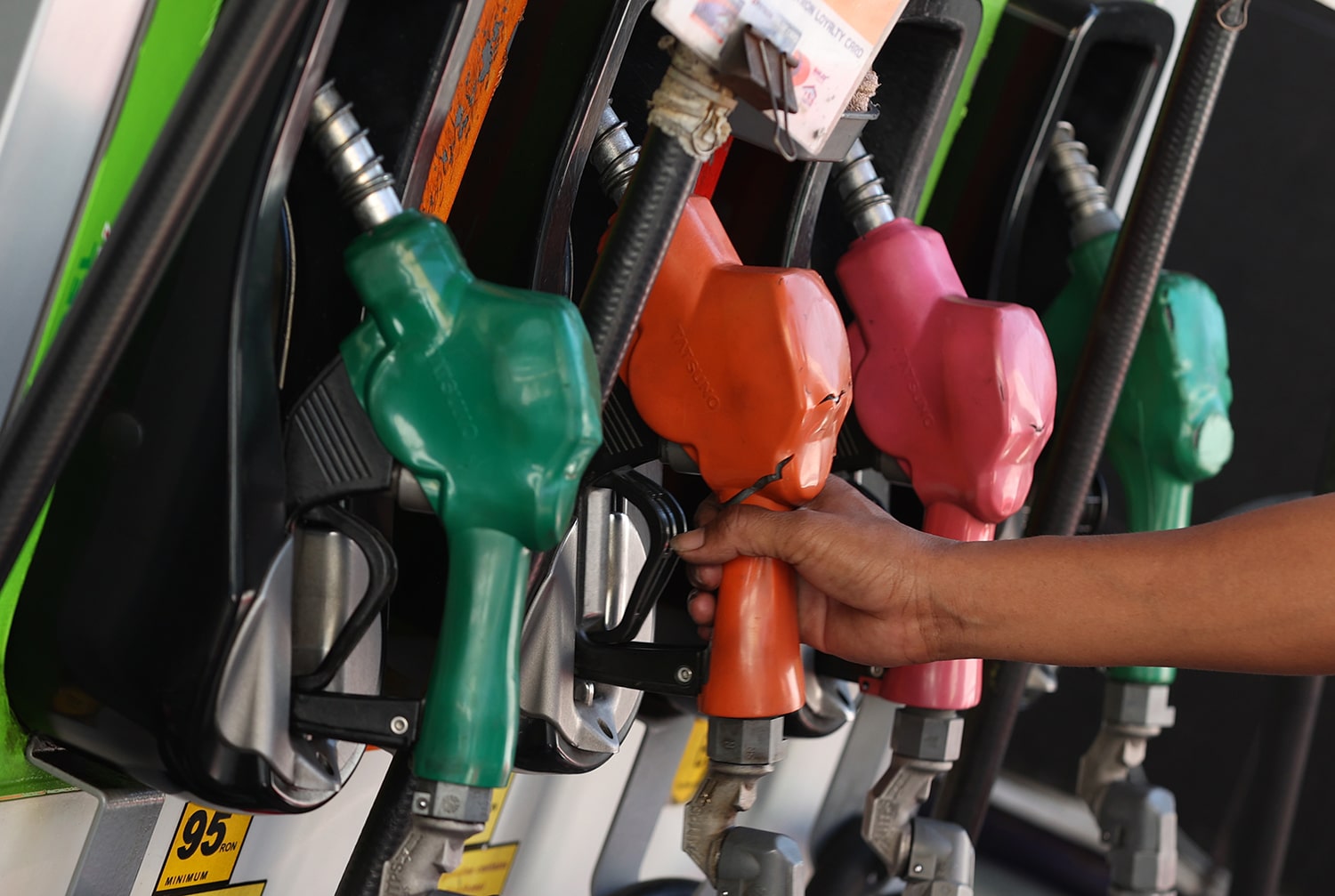
The peso forecast comes alongside a bleaker inflation outlook. The report projected inflation to peak at around eight percent in August, as higher fuel prices spill over into transport, logistics and production costs, while disruptions in fertilizer supply threaten to keep food prices elevated.
Inflation is expected to return within the Bangko Sentral ng Pilipinas’ two to four percent target band by April 2027.
DLSU also forecast the country’s current account deficit to widen sharply to 5.17 percent of gross domestic product in 2026, reflecting the Philippines’ heavy dependence on imported petroleum and the impact of a weaker peso on the dollar value of the economy. The deficit is seen narrowing to 4.45 percent in 2027 and 3.77 percent in 2028.
The report likewise cut its 2026 gross domestic product growth forecast to 3.11 percent from 3.79 percent in April, citing the Middle East conflict, higher energy costs, possible monetary tightening and emerging second-round effects on food prices. Growth is expected to improve to 3.93 percent in 2027 and 5.71 percent in 2028.