 1 month ago
32
1 month ago
32

Upgrade to High-Speed Internet for only ₱1499/month!
Enjoy up to 100 Mbps fiber broadband, perfect for browsing, streaming, and gaming.
Visit Suniway.ph to learn
As AI becomes part of everyday work, HR leaders have an opportunity to spend less time managing processes and more time helping people build new skills and thrive at work
Editor’s note: This content is sponsored by Sprout Solutions and was handled by BrandRap, the sales and marketing arm of Rappler. No member of the news and editorial team participated in the publishing of this piece.
For much of its history, HR has been expected to do two jobs at once. One is keeping the organization running — hiring, payroll, compliance, documentation, and the administrative work that keeps the business afloat. The other is developing people — coaching first-time managers, strengthening workplace culture, and helping employees grow in their careers.
Those responsibilities have always competed for the same finite resource: time. As AI becomes more embedded in the workplace, that dynamic is beginning to change.
That shift is reflected in the findings of the “State of HR Report 2026”, published by Sprout Solutions and BS Works. Surveying 3,500+ employees nationwide across 13 industries, the report examines how employees are using AI, where organizations are falling behind, and what those trends could mean for the future of work.
More than productivity gains
Nearly eight in 10 employees (78%) now use AI in their daily work, according to the report. Communication, information processing, and decision-making are the three most common use cases, which may indicate that AI is no longer confined to niche technical functions but also to routine tasks.
While the report mainly reflects employees’ experiences, the findings may also point to broader implications for HR. Work like preparing reports and communicating internal policies is necessary to keep the organization running, but it’s also long competed with the work employees remember most, such as meaningful feedback, one-on-one career conversations, and building a workplace culture people want to be part of.
As AI increasingly supports routine work across organizations, the findings suggest HR may have greater capacity to invest time in the parts of the role that depend on human judgment and empathy.
What AI gives back isn’t just time, but mental load
The report found that employees who use AI more frequently also report working faster, producing more output, spending fewer hours on overtime, and experiencing lower levels of work-related stress.
These findings suggest AI’s value extends beyond just efficiency. While routine work may not be difficult, one may find it often mentally demanding. It requires employees to constantly switch between tasks before they can focus on the work that calls for deeper thinking. AI appears to be reducing that burden by helping employees move through those routine tasks more efficiently.
For HR leaders, that creates an opportunity to redirect their attention where it is most valuable. Less time spent on repetitive admin work means more time strengthening employee engagement, designing learning programs, and responding to workplace challenges before they become larger organizational problems.
“The promise of AI has never been about replacing people. It’s about giving people the capacity to do higher-value work,” said Kislay Chandra, chief operating officer of Sprout Solutions. “For HR, that means creating more time for leadership, development, and meaningful employee experiences.”
The real value of AI, then, isn’t measured only by how much faster work gets done. It’s measured by the quality of work people now have the capacity to do.
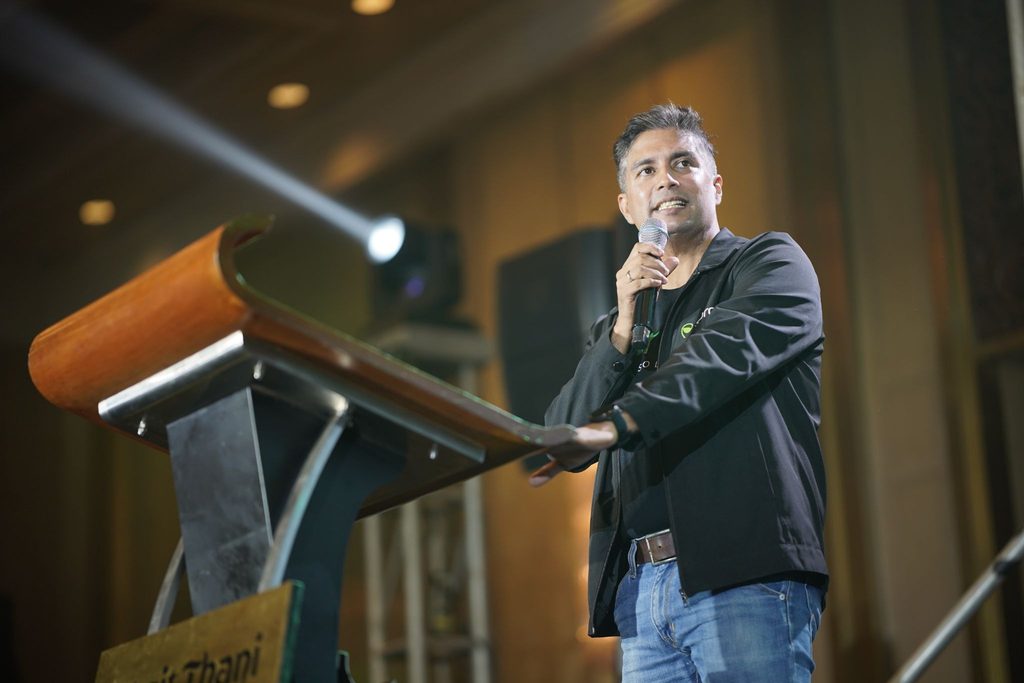 LEADING AI-READINESS. Kislay Chandra, chief operating officer of Sprout Solutions, discusses how AI is changing the role of HR during the State of HR Summit 2026
The next AI challenge belongs to HR
If AI adoption tells one story, the report’s training data tells another. While 78% of employees now use AI in their daily work, only 35% say their organizations provide role-specific AI training. Another 36% are unsure whether such training is available, highlighting a possible gap in how these learning opportunities are communicated.
“Filipinos have embraced AI faster than many organizations anticipated,” Chandra said. “The challenge now is helping leaders close the gap between adoption and readiness by building trust, developing skills, and creating workplaces where people can thrive alongside technology.”
For HR, that brings the conversation beyond implementation. Rolling out AI tools is only the first step. Still, the longer-term work lies in designing role-specific learning, equipping managers to lead AI-enabled teams, and helping employees develop sound judgment alongside technical proficiency.
The future of HR won’t be defined by how many processes AI can automate. It will be defined by whether the time AI creates is reinvested where it matters most.
Get a full copy of Sprout Solutions and BS Works’ Stare of HR Report 2026 here. – Rappler.com